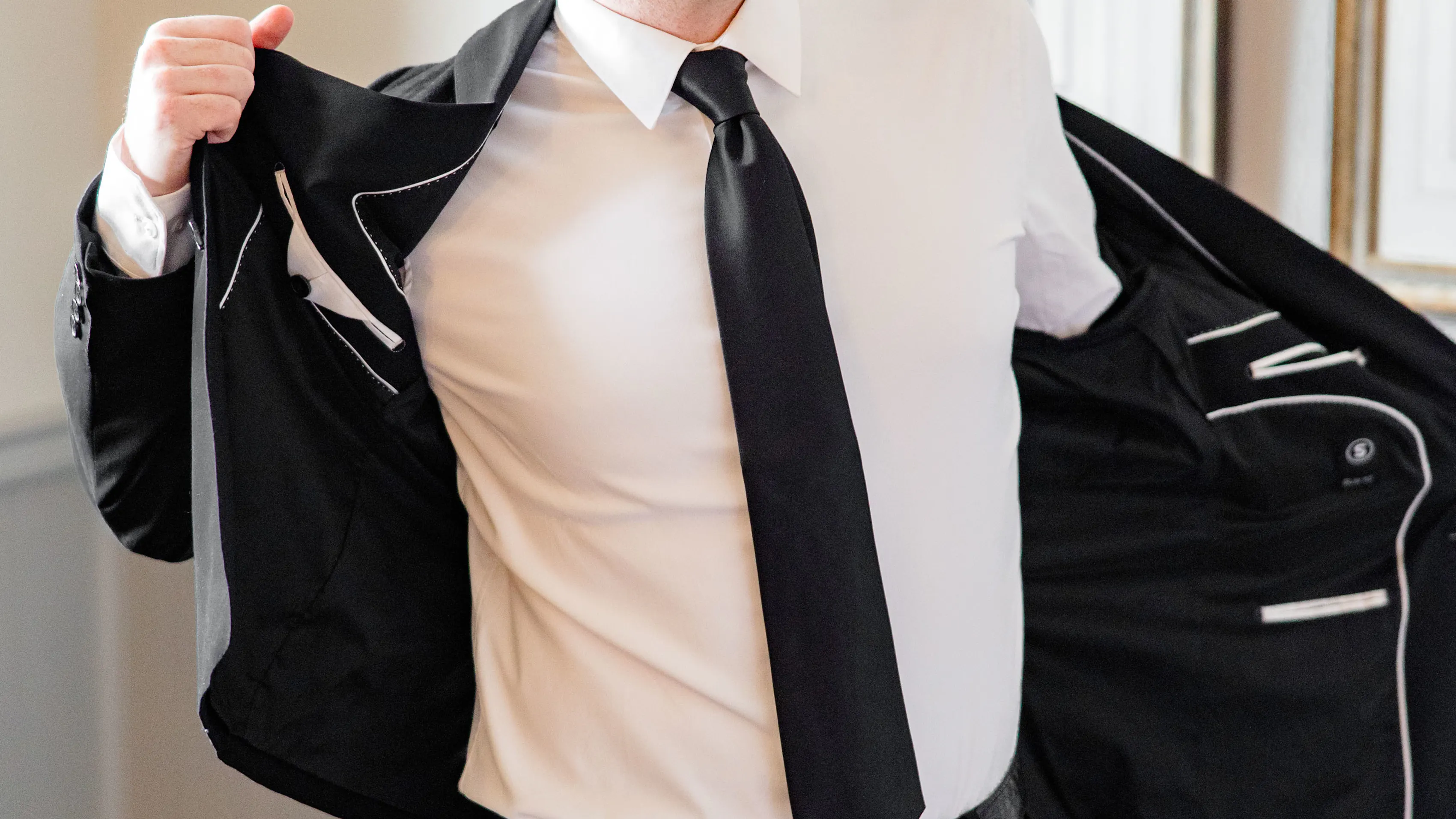
Katie & Alec Photography
Fabric First: What Actually Separates a Good Suit From a Frustrating One
Most suit-buying advice starts with color and fit, but the suit material underneath it all decides how the suit feels at hour six of a reception, how it looks after a flight, and how many seasons you get out of it.
At a Glance:
- Fabric weight, measured in ounces per yard, is the single biggest predictor of how warm a suit will feel.
- Weave structure controls airflow. An open weave or plain weave breathes, while tighter weaves hold their shape.
- Wrinkle resistance matters most in recovery, since no fabric stays perfectly flat all day.
- Stretch content, even a small percentage, changes range of motion more than most people expect.
- A natural fiber like wool or linen solves one problem well. Performance blends aim to solve several at once.
- SuitShop's signature Eco Stretch fabric was built to adapt to year-round wear rather than one season or one occasion.
- Eco Stretch suit fabric from SuitShop offers a classic crisp suit material look and feel while also allowing for more flexibility and comfort than usual.
The right fabric is the difference between a suit you reach for and one that sits in the closet between formal occasions. Below is what to look for, why it matters, and how different materials perform when conditions get difficult.
What Makes a Good Suit Material?
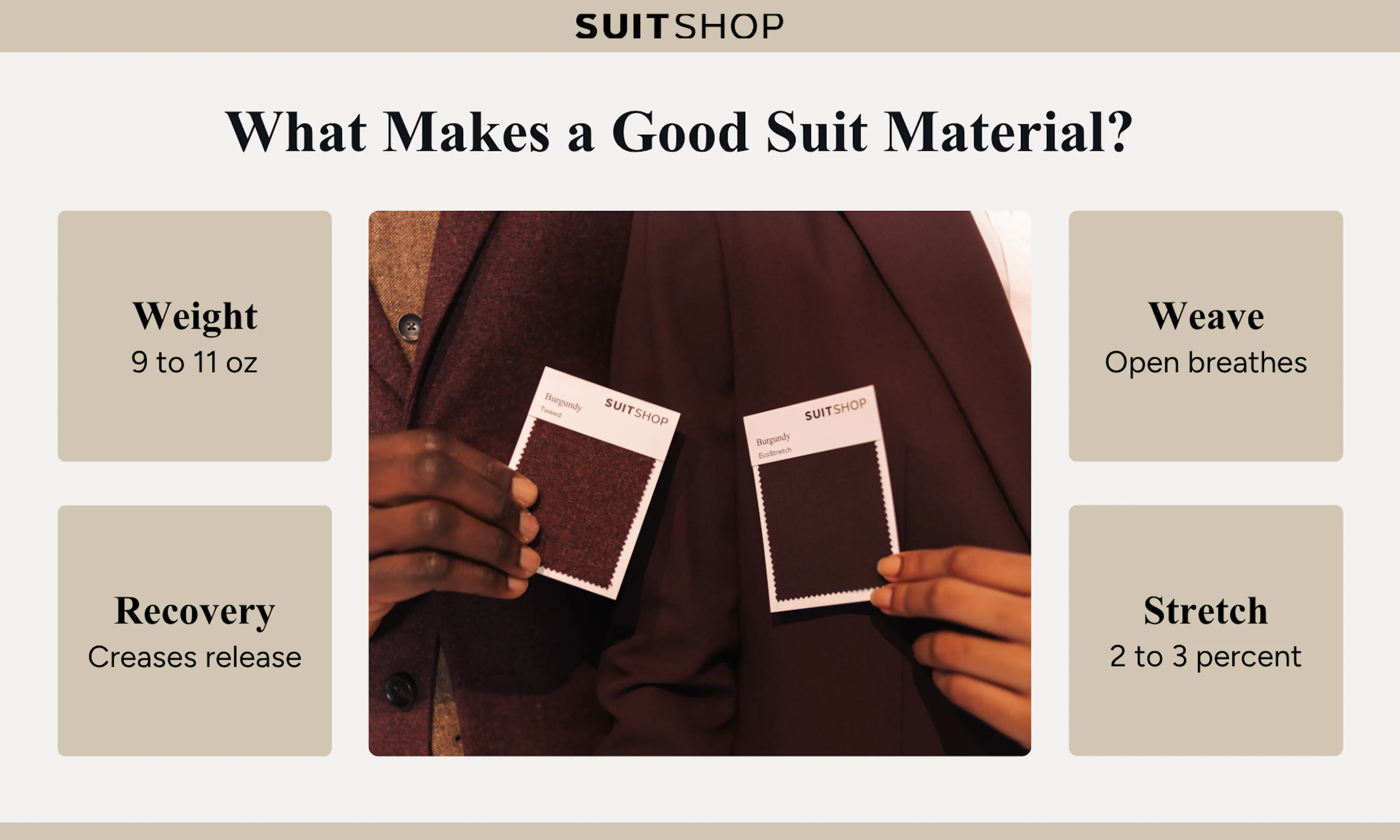
A good suit fabric balances four things: weight, breathability, wrinkle resistance, and recovery. Weight determines warmth. A breathable fabric moves heat and moisture away from the body so your body temperature stays steady. Wrinkle resistance keeps the suit presentable through travel and long days. Recovery is the fabric's ability to return to its original shape after being stretched, sat on, or packed.
No single fiber wins all four categories. Linen breathes beautifully and creases immediately. A heavy wool suit drapes well and traps heat.
The most practical question is not which material is best in the abstract, but which combination of properties matches how often you actually wear a suit and where.
Fabric Weight: The Number That Predicts Comfort
Suit fabric weight is typically listed in ounces per yard. Anything in the 7 to 9 ounce range counts as tropical weight wool or lightweight wool and suits warm weather. The 9 to 11 ounce range covers most year-round suiting. Heavier fabrics at 12 ounces and above belong to the cooler months and will feel punishing at a summer wedding.
Here is how the ranges translate to real conditions:
Weight (oz/yd) | Category | Best For | Comfort Ceiling |
6 to 8 | Tropical / lightweight fabric | Outdoor weddings, destination events, hot weather | Comfortable above 85°F |
9 to 11 | Year-round | Most weddings, business suit wear, formal occasions | Comfortable 50°F to 85°F |
12 to 14 | Heavyweight | Cooler months, structured tailoring | Warm below 60°F |
For context, average June highs across much of the United States sit between 80°F and 90°F, and roughly 15 percent of American weddings take place outdoors. A 13-ounce classic wool suit in that setting is working against you. If your event lands in the warmer months, a lighter fabric is the first decision to make, before color and before fit.
Weave, Yarn Count, and Thread Count Explained
Weave describes how threads are interlaced. A plain weave produces a flatter, more open structure that lets air pass through, which is why plain weave and open weave constructions dominate the summer suit category. Twill weave creates diagonal ridges, adding density and wrinkle resistance for cooler weather.
You will also see "Super" numbers on wool suiting, like Super 110s or Super 150s. Higher numbers indicate a finer fiber diameter, not better performance in every sense. Super 150s feels remarkably smooth and is also more delicate, which is why it shows up on a made-to-measure suit or custom suit worn a few times a year rather than on a high-quality suit meant for regular rotation. Super 100s to Super 120s is the practical range for a wedding suit you plan to wear again.
Thread count is worth setting aside entirely. It is a bedding metric borrowed for suiting, and it does not describe suit fabric performance in any useful way. Weight and weave tell you far more.
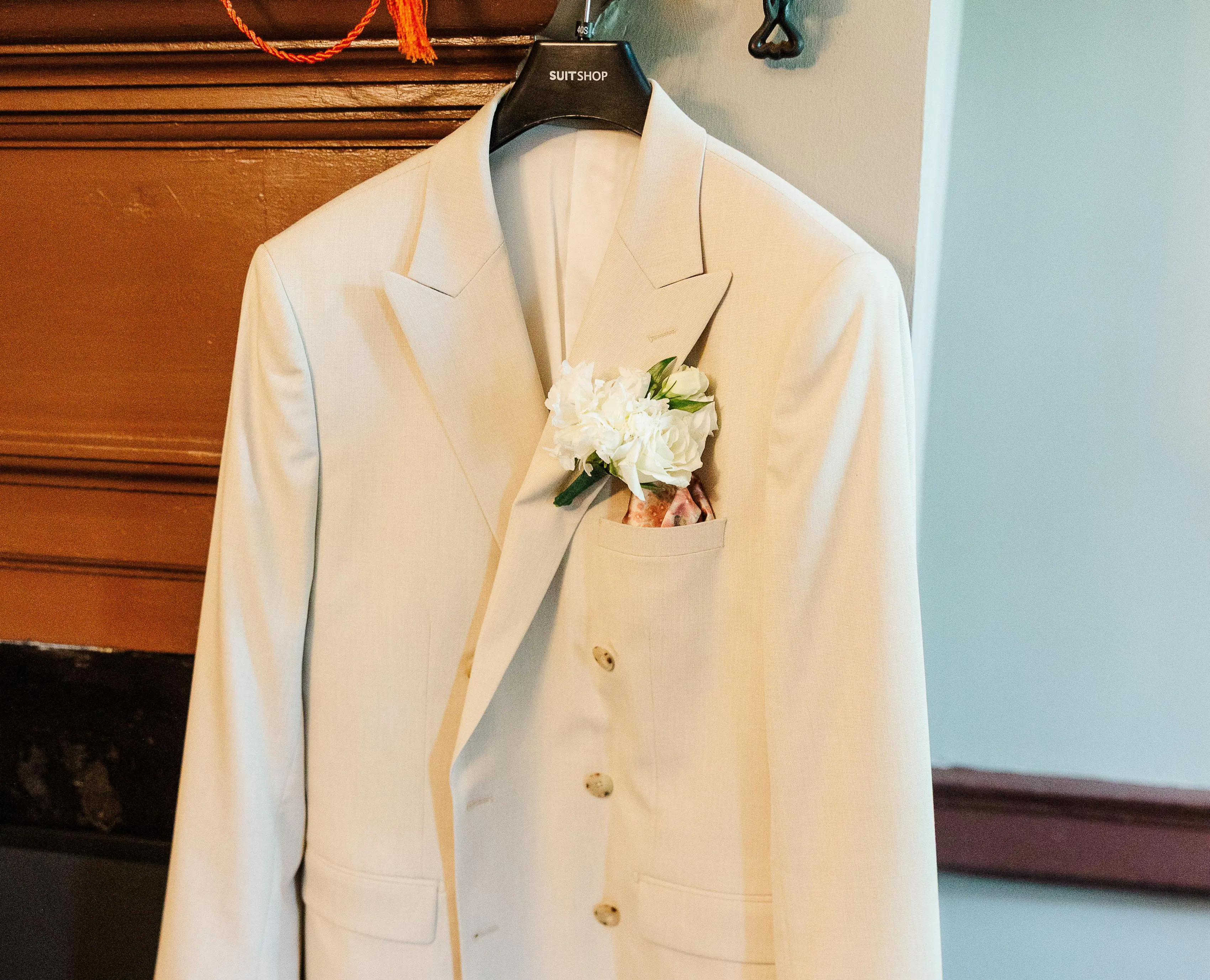
Amanda May Photos
How the Common Suit Fabrics Compare
Each suit material has a clear strength and a clear tradeoff. None of these are bad choices. They are simply specialized in different ways.
Material | Breathability | Wrinkle Resistance | Stretch | Best Use |
Linen | Excellent | Poor | Minimal | Beach and destination weddings, hot weather |
Tropical wool | Very good | Good | Low | Summer wedding, warm weather formal event |
Worsted wool | Good | Very good | Low | Business suit, formal occasions, cooler months |
Cotton | Good | Fair | Low | Casual and daytime wear |
Wool blend | Very good | Good | Low to moderate | Transitional seasons, outdoor events |
Performance blend | Very good | Excellent | Moderate to high | Travel, all-day wear, year-round events |
A linen suit is genuinely pleasant in 90-degree heat, and linen fibers have very low elastic recovery, so creases set almost instantly and stay. Worsted wool is the traditional standard for good reason: the yarns are combed and tightly spun, producing a smooth surface that resists wrinkling and holds a press. It is a natural fiber that manages moisture well, though heavier weights hold warmth enough to be uncomfortable outdoors in July.
Tropical weight wool splits the difference with an open weave and a lighter hand. It performs well in warmer weather and carries a higher price and more careful handling requirements. A cotton suit sits in casual territory, comfortable and breathable but prone to creasing across the lap and elbows. A wool blend often adds a small amount of synthetic material specifically to improve wrinkle recovery, which is why blends have quietly taken over the travel and event categories.
The Travel Test
Wrinkle recovery separates a suit that survives a checked bag from one that needs a steamer and an hour. Fabrics with higher elastic recovery bounce back after compression. Wool recovers reasonably well thanks to its natural crimp. Linen and cotton, both cellulose fibers, hold folds. Engineered fabrics are built specifically around this property.
If you fly to more than one wedding a year, prioritize recovery over almost anything else. A few habits help in different ways regardless of material:
- Hang the jacket immediately on arrival and let gravity do most of the work.
- Use a garment bag rather than folding into a suitcase when possible.
- Hang the suit in the bathroom during a hot shower for 10 minutes to release light creases.
- Skip the iron on blended fabrics and use a steamer instead.
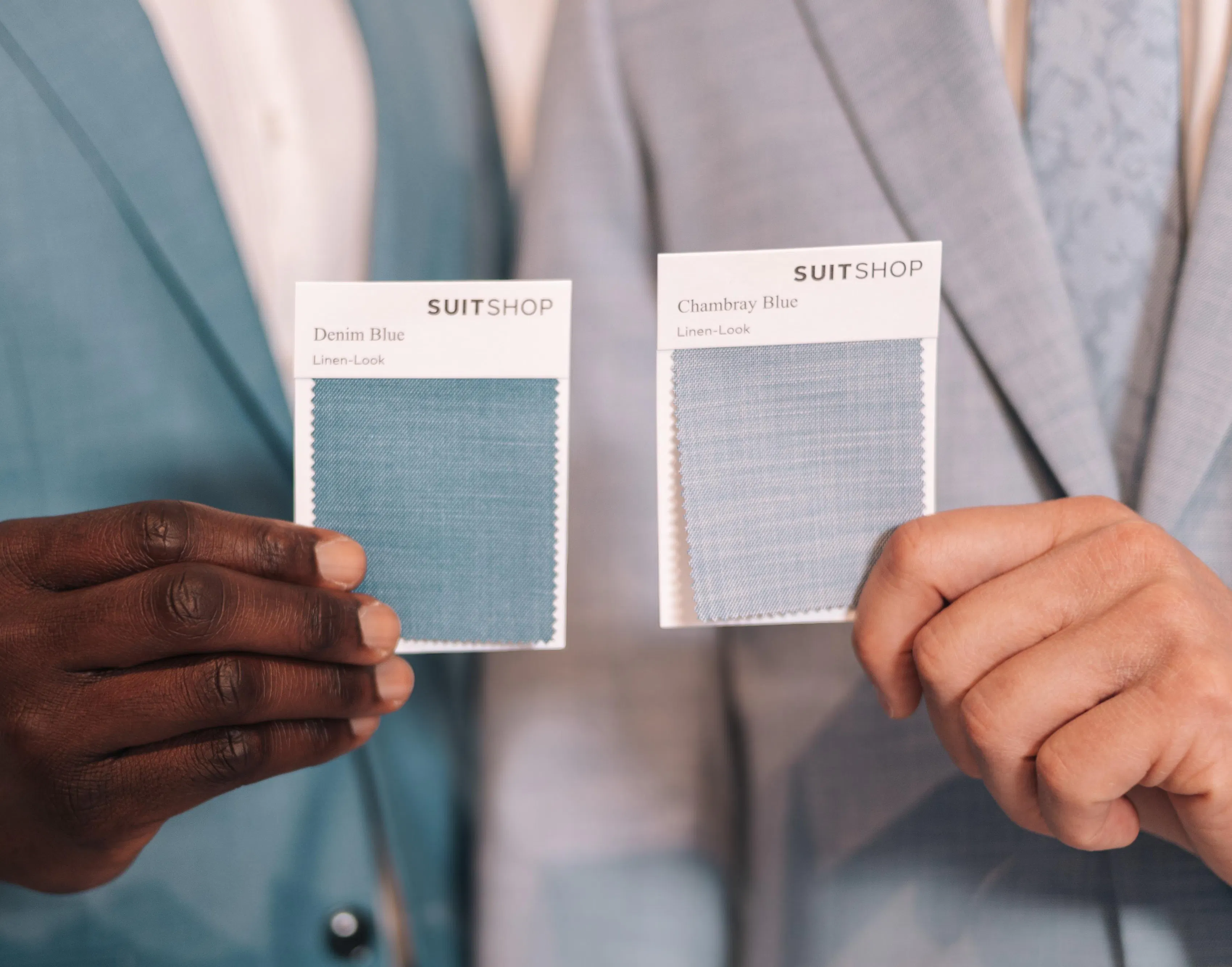
Harvest Photography
Stretch: The Underrated Comfort Factor
A small amount of elastane changes how a suit moves with you. Even 2 to 3 percent stretch content noticeably increases range of motion through the shoulders and seat, which is exactly where suits feel restrictive. Traditional 100 percent wool suiting has no mechanical stretch and relies entirely on cut and construction for comfort, which is part of why a slim fit in rigid fabric can feel unforgiving after two hours.
This is the property people notice fastest when they sit down at a reception, lift a child, or reach across a table.
Where SuitShop's Fabric Lands
Most of SuitShop's suits and tuxedos use a performance fabric, Eco Stretch, engineered around the four properties above rather than optimized for a single season. The result is a year-round weight that stays breathable at outdoor weddings, includes natural stretch for movement, and releases creases quickly enough that a suit can come out of a garment bag and go straight into a ceremony.
What that means in practice:
- Comfortable across a wide temperature range, not just warm weather or cooler months.
- Holds structure and drape with quality construction, without the weight of heavier fabrics.
- Bounces back from packing, sitting, and long days on your feet.
- Simple care rather than dry-clean-only maintenance.
- Priced closer to a rental than to a custom suit, and it is yours to keep.
Fabric behavior is hard to judge from a screen, which is why free swatches are worth ordering before you commit to a color. Feeling the hand of the material answers questions that product photography cannot.


Why This Matters Most for Wedding Attire
Weddings are the hardest test a suit faces. You are outdoors for photos, indoors for dinner, on your feet for hours, and often traveling to get there. A fabric that performs in only one of those conditions will fail somewhere in the day. The same applies to the rest of the wedding party, wearing the same suit in the same conditions for the same number of hours.
The perfect suit fabric for a July ceremony is also the one that handles a client meeting, a holiday party, and a flight the following month. That flexibility is what makes a purchased suit a better value than a rented one.
Find the Suit You Will Actually Keep Wearing
SuitShop builds suits and tuxedos meant to hold up at weddings, on the road, and in regular rotation. Browse navy, grey, and black options, pick up suit jackets that work just as well as standalone blazers, and finish the look with dress shirts, ties, dress pants, and accessories. Coordinating a wedding party? Register five or more members and one suit is free, yours to keep.

Sean Parks
Sean Parks is a writer with a focus on men's suiting, formalwear, and personal style. Through his work with SuitShop, he has developed a deep understanding of suit fit, styling, wedding attire, and the details that help people feel confident in what they wear. A proud University of Georgia graduate with dual degrees in Public Relations and Communication Studies, Sean brings a research-driven approach to making suiting advice clear and approachable. When he's not writing about menswear, you'll find him logging miles on the Atlanta Beltline or playing the guitar on his back porch.
More Articles

The Vineyard Wedding Guide: Planning, Venues, and What to Expect
by Sean Parks September 30, 2026

Homecoming Suit Buying Guide: What to Look For and Where to Shop
by Sean Parks September 30, 2026



Customer Service
Contact Us
- Get In Touch
- Corporate Services
- +1 (773) 303-6006
- info@suitshop.com
Sign up for emails
© Copyright 2026 SuitShop