Casual Wedding Attire: What It Actually Means (and What to Wear)
Published on August 17, 2026
By Sean Parks
Decode the Invite Before You Panic
If the invitation says "casual" and you are picturing jeans and a t-shirt, pause: that is almost never what the couple means.
At a Glance:
- "Casual" on a wedding invitation means put-together but relaxed, not truly casual.
- Jeans, t-shirts, shorts, flip-flops, and sneakers are generally off-limits unless the couple says otherwise.
- The dress-code ladder runs casual, dressy casual, cocktail, then formal and black tie.
- Venue and time of day are your best clues when the wording is vague.
- A suit you can dress down is the most flexible way to hit a fuzzy casual dress code.
Casual wedding attire trips people up because the word promises more freedom than it delivers. This guide decodes what casual really means, places it on the dress-code ladder, and shows how to land relaxed-but-polished without underdressing.
What Does Casual Wedding Attire Actually Mean?
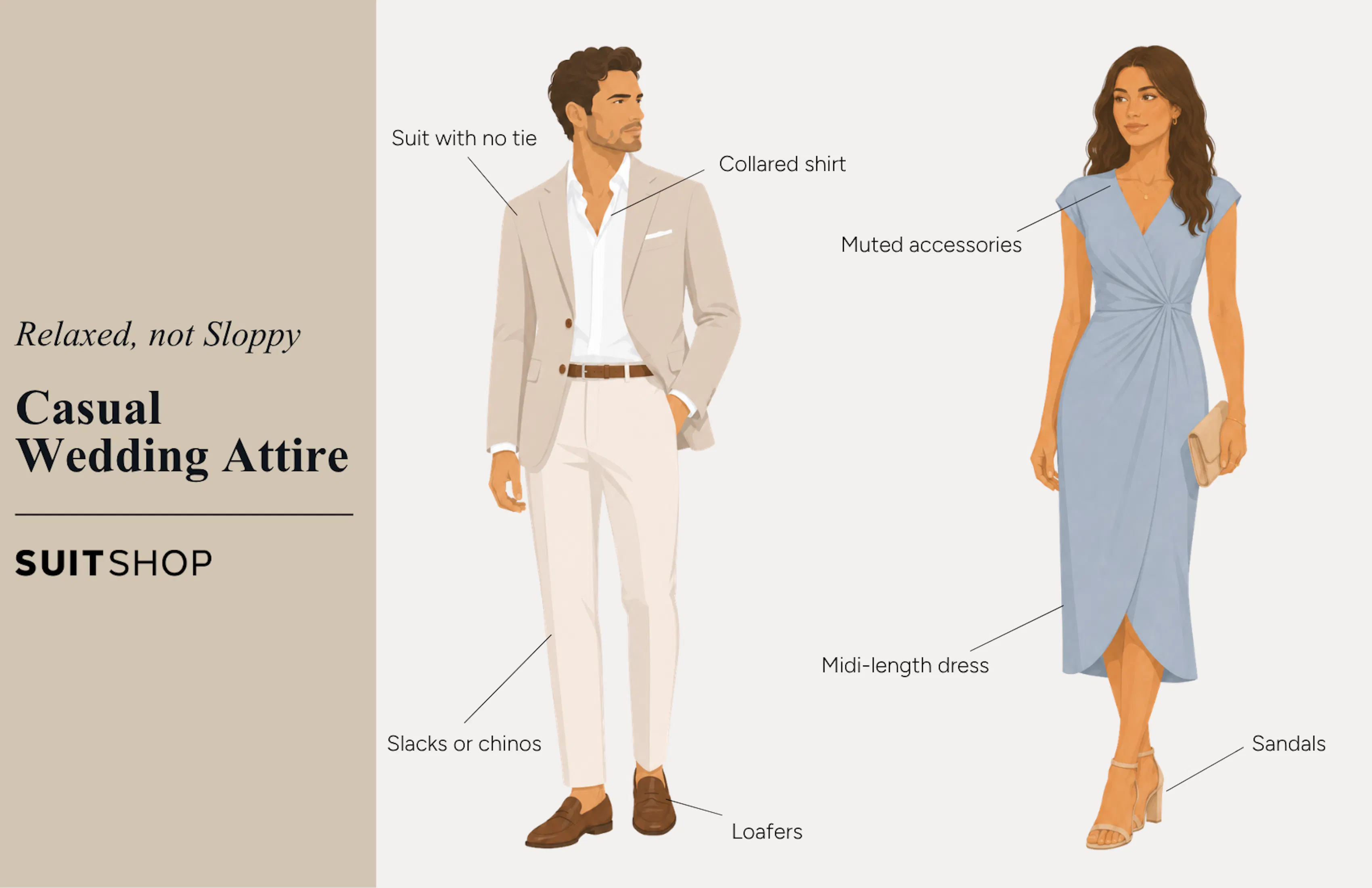
Casual wedding attire means an outfit a step above everyday wear: relaxed and comfortable, but still clearly an effort. It is not jeans and a tank top. Think of it as what you would wear to a nice dinner. Utilize polished separates or a simple dress, in fabrics and fits that read intentional rather than thrown together.
The key is to treat "casual" as relative to a wedding, not relative to a weekend. A bridal stylist quoted by The Knot frames it well: approach the event like a nice dinner, where a guest might show up in pants and a blazer with no tie, or a nice shirt and slacks, and a dress, jumpsuit, or two-piece set all work. The mindset that gets people in trouble is reading casual as permission to dress down completely. A wedding is still a celebration, so the floor is higher than your everyday closet.
The "Jeans Are Fine" Myth, Cleared Up
No, jeans are usually not fine. Across etiquette guides, the same items land on the do-not-wear list for casual weddings: jeans, t-shirts, shorts, tank tops, flip-flops, and sneakers. The exception is narrow: only when the couple explicitly invites it, such as a western or barn wedding that calls for denim and boots.
This is the single most common casual-wedding mistake, so it is worth stating plainly. Etiquette sources are direct that you should not mistake a casual dress code for jeans and a t-shirt, and to trade denim for khakis or slacks. Even at relaxed events, guides advise steering clear of tank tops, shorts, flip-flops, and sneakers unless the couple notes otherwise. When a couple does want jeans, they will tell you, often tied to a specific venue like a ranch. Absent that, assume slacks or a dress.
The Wedding Dress-Code Ladder
Placing "casual" correctly means seeing the whole ladder. Wedding dress codes climb from casual to dressy casual, then cocktail, then formal and black tie, with each rung adding structure and formality. Knowing the neighbors on either side of casual keeps you from drifting too far down (or overcorrecting too far up).
Here is how the common codes compare:
Dress code | What it signals | Typical guest look |
Casual | Relaxed but still wedding-appropriate | Slacks or chinos with a collared shirt; a sundress or jumpsuit |
Dressy casual | Polished, intentional, a notch up | Dress pants and a button-down; a midi dress or chic jumpsuit |
Cocktail | Semi-formal, party-ready | A suit and tie; a knee-length or midi dress |
Formal / black tie | The dressiest end | A dark suit or tuxedo; a long gown or dressy pantsuit |
A few clarifications worth knowing. Dressy casual sits between casual and semi-formal, asking for deliberate polish through fabric and accessories. Cocktail attire usually calls for a suit and tie for men and a tea-length, knee-length, or midi dress for women. And only at the very top, black tie, does a tuxedo become the expectation rather than an option. For more detailed information, please check out our full guide on how to dress for different wedding formalities.
When the Invitation Doesn't Say
When no dress code is listed, let the venue and time of day decide for you. A barn or backyard leans casual; a garden or loft leans dressy casual; a hotel ballroom or country club leans cocktail or above. Daytime weddings tend to run lighter and slightly less formal, while evening weddings lean dressier and darker.
These context clues are reliable. Etiquette guides recommend using the venue as your gauge, with rustic and barn settings inviting casual while ballrooms call for cocktail at a minimum.
Timing matters too: a wedding before 4 p.m. is generally a touch more casual with lighter fabrics, while after 4 p.m. trends more formal. When you are still unsure, the universal rule applies: it is safer to be slightly overdressed than underdressed. Check the wedding website and invitation wording for any final hints.
A Few Universal Guidelines
Some guidance holds no matter your outfit or gender. Dress for the weather and the setting, keep it celebratory, and never wear anything close to bridal white. A casual code is an invitation to show personality through color and pattern, as long as the overall look stays polished.
Quick rules that apply across the board:
- Avoid white, ivory, and cream, which are reserved for the person getting married.
- Match the season with fabric: lightweight pieces for a summer or beach wedding, layers for cooler months.
- Skip the off-limits items: jeans, shorts, t-shirts, flip-flops, and sneakers, unless told otherwise.
- Use color and fun patterns, like florals, bright colors, or jewel tones, to feel festive.
- Choose comfortable, venue-appropriate shoes, since grass and sand make stilettos a struggle.
Why a Suit Is the Most Flexible Casual Answer
Here is the part most guides miss: a suit is the most adjustable garment on the whole ladder. The same pieces dress up or down depending on the shirt, the tie, and the shoes, which makes suiting the easiest way to hit a fuzzy casual dress code when you would rather be slightly over than under. The trick is knowing how to dial it down.
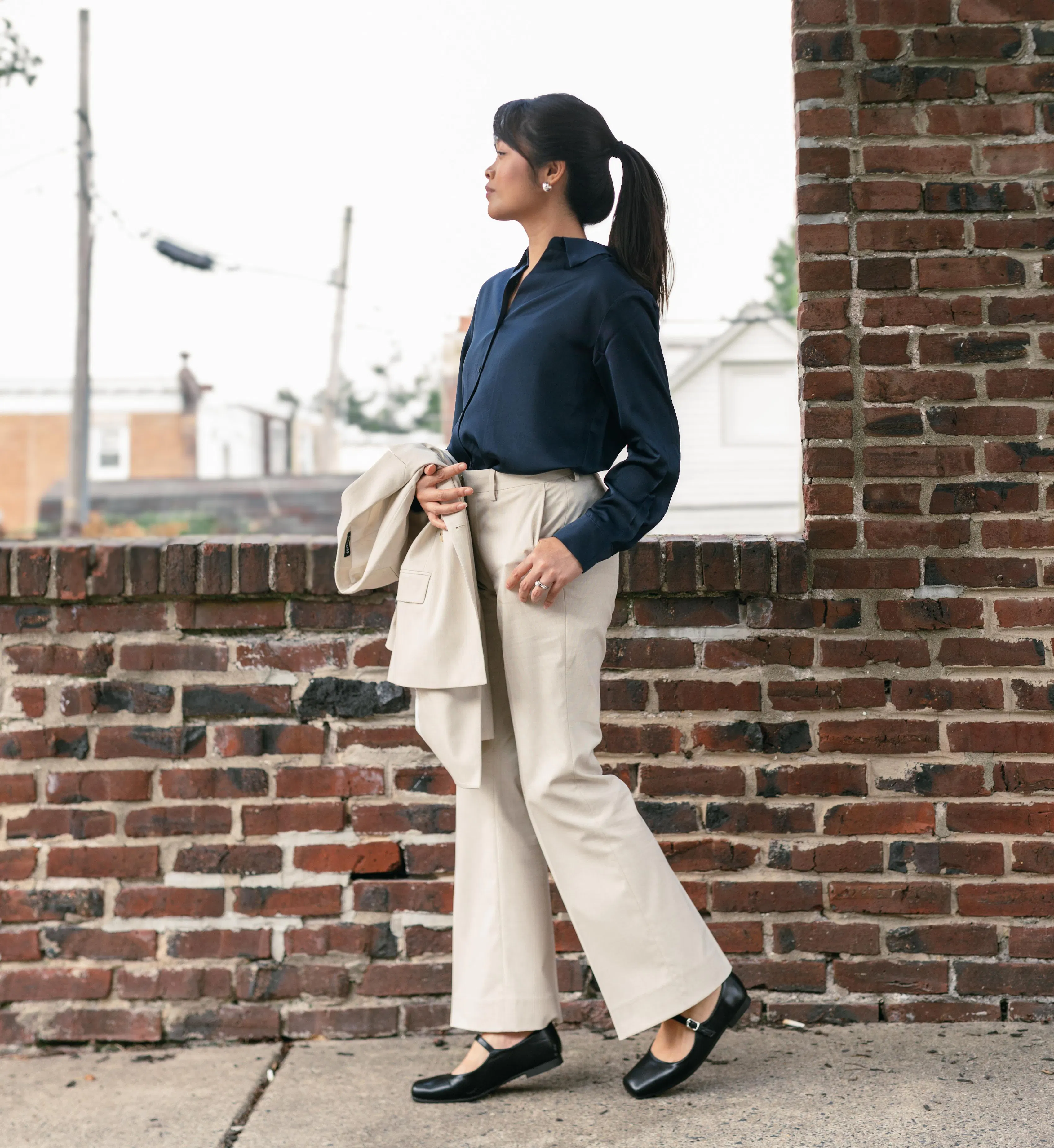
A suit reads relaxed the moment you remove the formal signals. Drop the tie, open the collar of a crisp white button-down, and the same outfit shifts from cocktail to casual in seconds. Even better, the jacket works on its own: a suit jacket worn as a blazer over a knit or open shirt, with no tie, looks put-together without looking stiff. Because the pieces are versatile, you can build the exact level of formality the invitation asks for:
- For dressy casual: dress pants with an open-collar shirt, jacket optional.
- For a relaxed daytime wedding: the jacket as a blazer over a button-down, no tie.
- For cocktail and up: add the tie and dress shoes and the same suit climbs the ladder.
This flexibility is the honest reason a suit belongs in a casual-wedding conversation. It is not about overdressing; it is about owning pieces that adjust to whatever "casual" turns out to mean. And this works for women and nonbinary guests too, since a relaxed suit or separates is a sharp alternative to a dress.
From Casual Wedding to Every Wedding
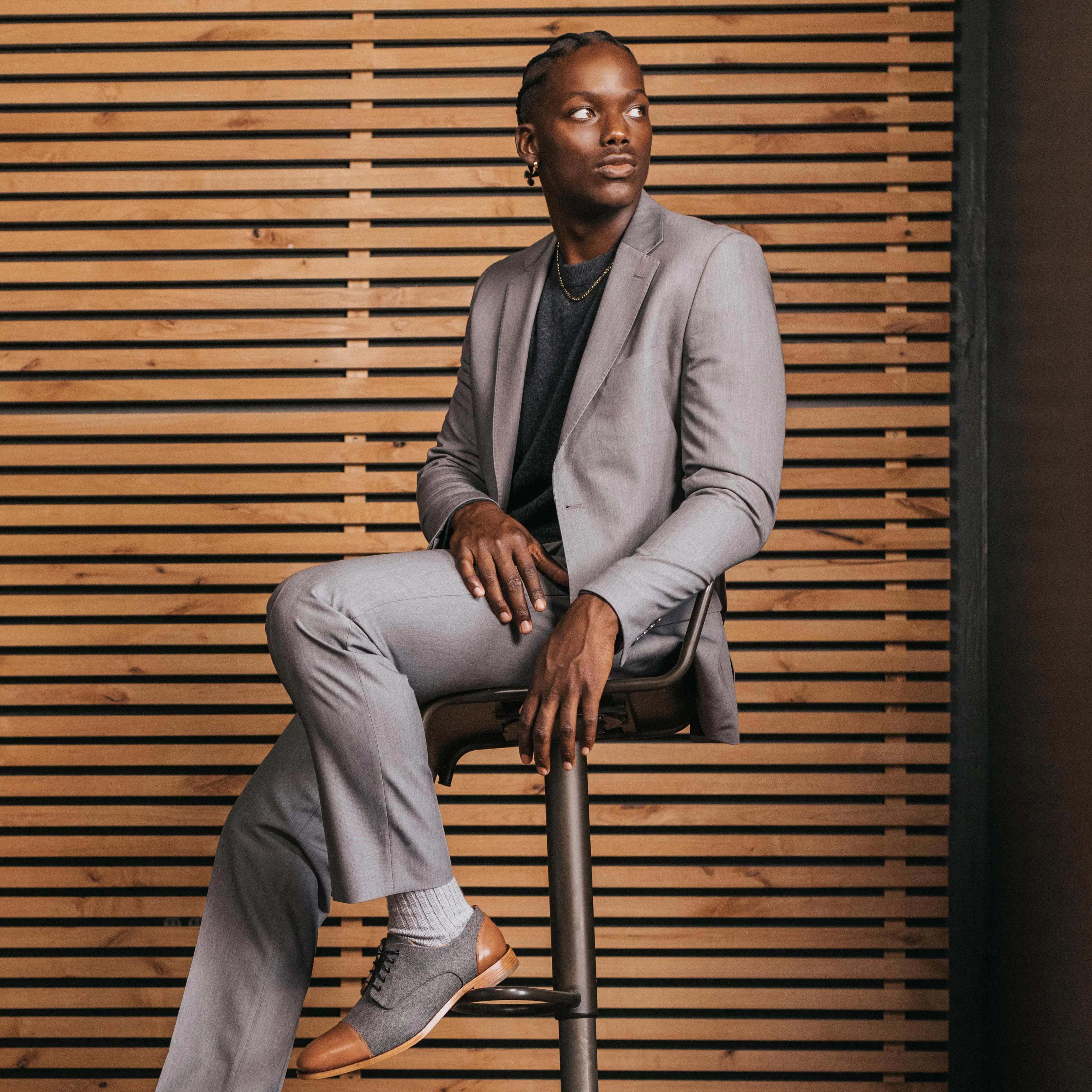
The reason a suit earns its place here is the same reason it earns its place in your closet: one set of pieces covers a huge range of occasions. The suit you dress down for a casual wedding is the same suit you dress up for the next cocktail or formal event, which makes it one of the most useful things you can own for wedding season.
A quality suit pays off across every invitation you will get. Skip the tie for a garden wedding, add it for a ballroom reception, and wear the jacket alone as a blazer for the rehearsal dinner or the office. Choosing a suit you own and keep, rather than rent, means you are ready for any dress code on the ladder without scrambling each time a new invitation arrives.


Build Your Casual Wedding Look at SuitShop
A suit you can dress up or down is the most forgiving answer to a vague dress code, and SuitShop is built for exactly that flexibility. Start with the pieces and style them to the setting.
A few easy ways to start:
- Choose a versatile suit in a color like grey or navy, or browse the full suits and tuxedos range.
- Wear the suit jacket as a blazer over a knit or an open-collar shirt for an easy casual look.
- Pair a crisp dress shirt with the option to add or skip a tie depending on how casual the day turns out to be.
SuitShop is size- and gender-inclusive, so everyone in your group can land the same relaxed-but-polished look. Free fabric swatches, the online Fit Finder, and showrooms built for easy in-person fittings take the guesswork out of sizing. Start your order at SuitShop and put together a casual wedding look you can wear to every dress code on the calendar.

Sean Parks
Sean Parks is a writer with a focus on men's suiting, formalwear, and personal style. Through his work with SuitShop, he has developed a deep understanding of suit fit, styling, wedding attire, and the details that help people feel confident in what they wear. A proud University of Georgia graduate with dual degrees in Public Relations and Communication Studies, Sean brings a research-driven approach to making suiting advice clear and approachable. When he's not writing about menswear, you'll find him logging miles on the Atlanta Beltline or playing the guitar on his back porch.
More Articles

The Vineyard Wedding Guide: Planning, Venues, and What to Expect
by Sean Parks September 30, 2026

Homecoming Suit Buying Guide: What to Look For and Where to Shop
by Sean Parks September 30, 2026



Customer Service
Contact Us
- Get In Touch
- Corporate Services
- +1 (773) 303-6006
- info@suitshop.com
Sign up for emails
© Copyright 2026 SuitShop