
Same Garment, Different Word (Mostly): The Short Answer Before You Buy
If you came here to settle a debate, here it is: a waistcoat and a vest are the same sleeveless garment, just named differently on each side of the Atlantic.
At a Glance:
- In American English, "vest" is the everyday word for the sleeveless layer worn over a dress shirt and under a suit jacket.
- "Waistcoat" is the British word for that exact same piece.
- In British English, "vest" means something else entirely: an undershirt.
- In US usage, "waistcoat" sounds a touch more formal or traditional, while "vest" is the broader catch-all that also covers casual and utility styles.
So the disagreement is about vocabulary, not tailoring. Once you know which word your region uses, the only choices left are the ones that actually affect how you look, which come down to fit, fabric, and the occasion.
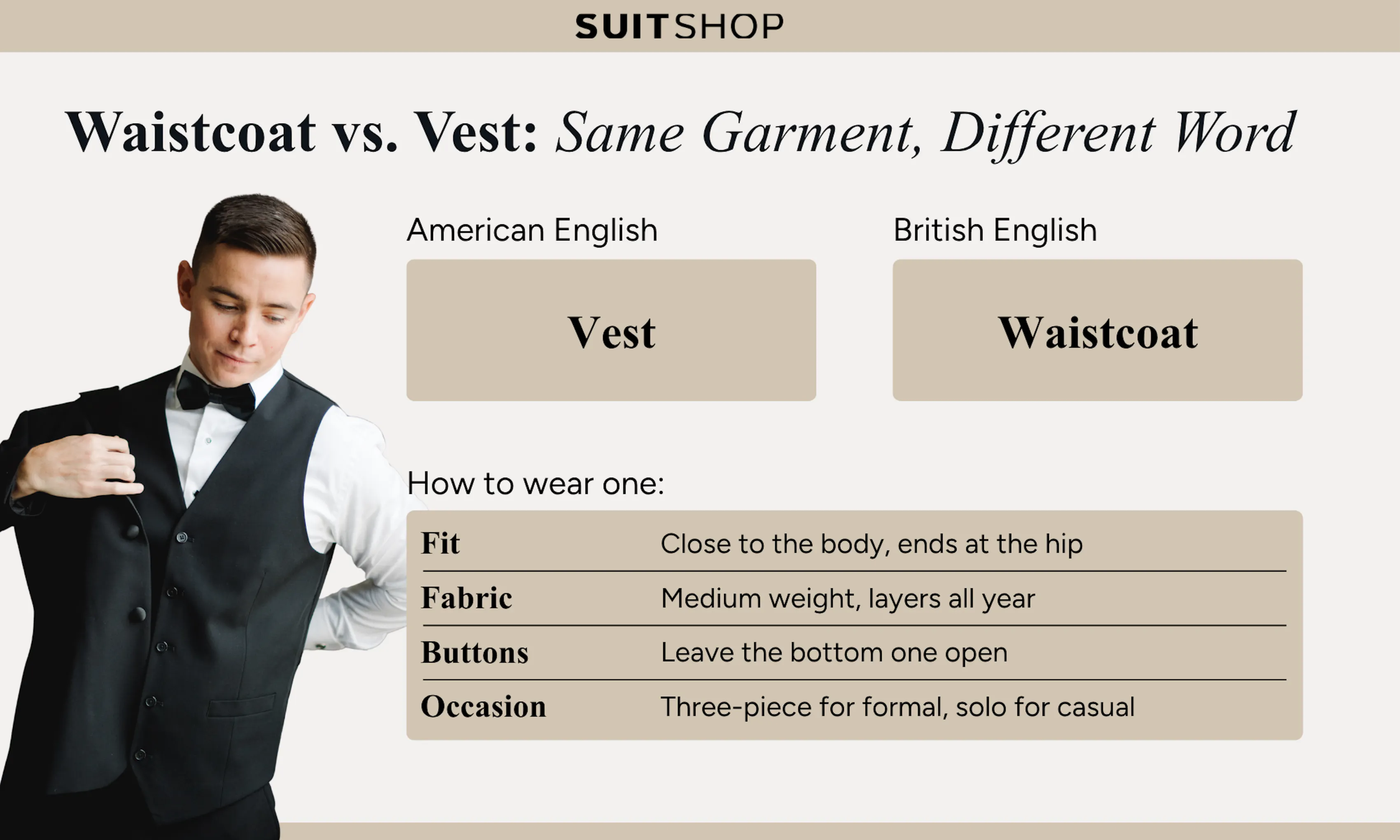
Waistcoat vs. Vest: The One-Line Difference
A waistcoat and a vest are the same sleeveless upper-body garment worn over a button-up dress shirt and under a suit jacket. American English calls it a vest. British English calls it a waistcoat. Both reach roughly hip length, button up the front, and form the third piece of a three-piece suit.
The confusion is almost entirely geographic. Per Collins Dictionary, the British word for a buttoned garment worn over a shirt is "waistcoat," and the usual American word for it is "vest." Reference works line up the same way, with Wikipedia noting the piece is called a vest in North American English and a waistcoat in British English. At SuitShop we call it a vest, so if you grew up calling it a waistcoat, you are looking for the same thing.
Here is the quick translation:
Garment | American English | British English |
Sleeveless layer over a shirt, under a jacket | Vest | Waistcoat |
Sleeveless undergarment worn next to the skin | Undershirt | Vest |
The British "Vest" Means Your Undershirt
Here is the wrinkle that trips up shoppers: in the UK, "vest" does not mean the formal piece at all. It means an undershirt, the thin sleeveless layer worn next to the skin for warmth. Ask for a "vest" in a British shop and you may be pointed toward underwear rather than formal attire.
This is a clean example of the same word splitting across regions. The practical takeaway: if you are shopping in the UK or reading a British style guide, use "waistcoat" for the formal piece so nobody hands you a t shirt instead.
Why "Waistcoat" Sounds More Formal in the US
In American usage, "waistcoat" and "vest" point to the same garment, but they carry slightly different tones. "Waistcoat" reads as more formal, traditional, and tailoring-focused, the word you reach for around black tie or a classic three-piece suit. "Vest" is the broader, more casual American catch-all.
That breadth is the key difference in connotation. In the US, "vest" covers far more than formalwear. The same three letters describe a sweater vest, a puffer or utility vest for outdoor activities, and the sleeveless jacket layer you add in cooler months. None of those are a sport coat or a frock coat, yet all are vests. So when an American says "waistcoat," they are usually signaling the dressy, suit-friendly version on purpose.
A quick map of how Americans use each term:
- Vest: the all-purpose word, from formal suiting to a casual sweater vest or an outdoor layer.
- Waistcoat: the formal-leaning word, almost always tied to a suit or formal outfit.
- Undershirt: the layer worn under your dress shirt, never called a "vest" in the US.
A Brief History: From Royal Decree to Three-Piece Staple
The garment has a precise birthday, which is rare in fashion. The waistcoat, originally called a vest, was introduced at the court of King Charles II in 1666. Both names have described the same evolving piece ever since, which is exactly why the vocabulary still overlaps today.
The detail is well documented. Diarist Samuel Pepys recorded the king's clothing decree in October 1666, and historians point to it as the moment the three-piece suit (jacket, trousers, and waistcoat) was introduced to Britain, partly to support the English wool trade and move away from French fashion. The piece was first known as a "vest," and as one tailoring history notes, it became known as a waistcoat because it reached the waist and no further, while the term "vest" stayed favored in America. The early version was long, even knee-length, before the silhouette shortened to roughly the length we recognize today by around 1790. The American word traces back to the French "veste," a sleeveless outer garment, another thread in the shared history.
One inherited habit survives to this day: leaving the bottom button undone. The custom is often attributed to King Edward VII, who reputedly could not fasten his own bottom button, prompting courtiers to follow suit.
What Actually Matters: Fit, Fabric, and Occasion
Forget the name for a moment, because the things that change how a vest looks are fit, fabric, and occasion. A vest should sit close to the body, cover the waistband, and end around hip length, with the v-shaped neckline framing your shirt and tie. Get those right and the label on the tag stops mattering.
A few points worth knowing before you choose:
- Fit: A vest should lie flat against the dress shirt with no gaping. Many include a waist adjuster at the back so you can fine-tune the fit toward a perfect fit.
- Fabric: A medium-weight fabric works across seasons and layers well under a suit jacket in cooler months.
- Buttons: Most modern waistcoats use a single-breasted front, though a double-breasted waistcoat is a bolder, more traditional option. Leave the bottom button open either way.
- Occasion: A vest dresses up a two-piece suit for business meetings, weddings, and formal events, and can also be worn on its own in more casual settings.
The single biggest factor is fit, which is why checking a size chart and your own garment measurements (chest and waist especially) matters more than choosing between two words for the same thing.
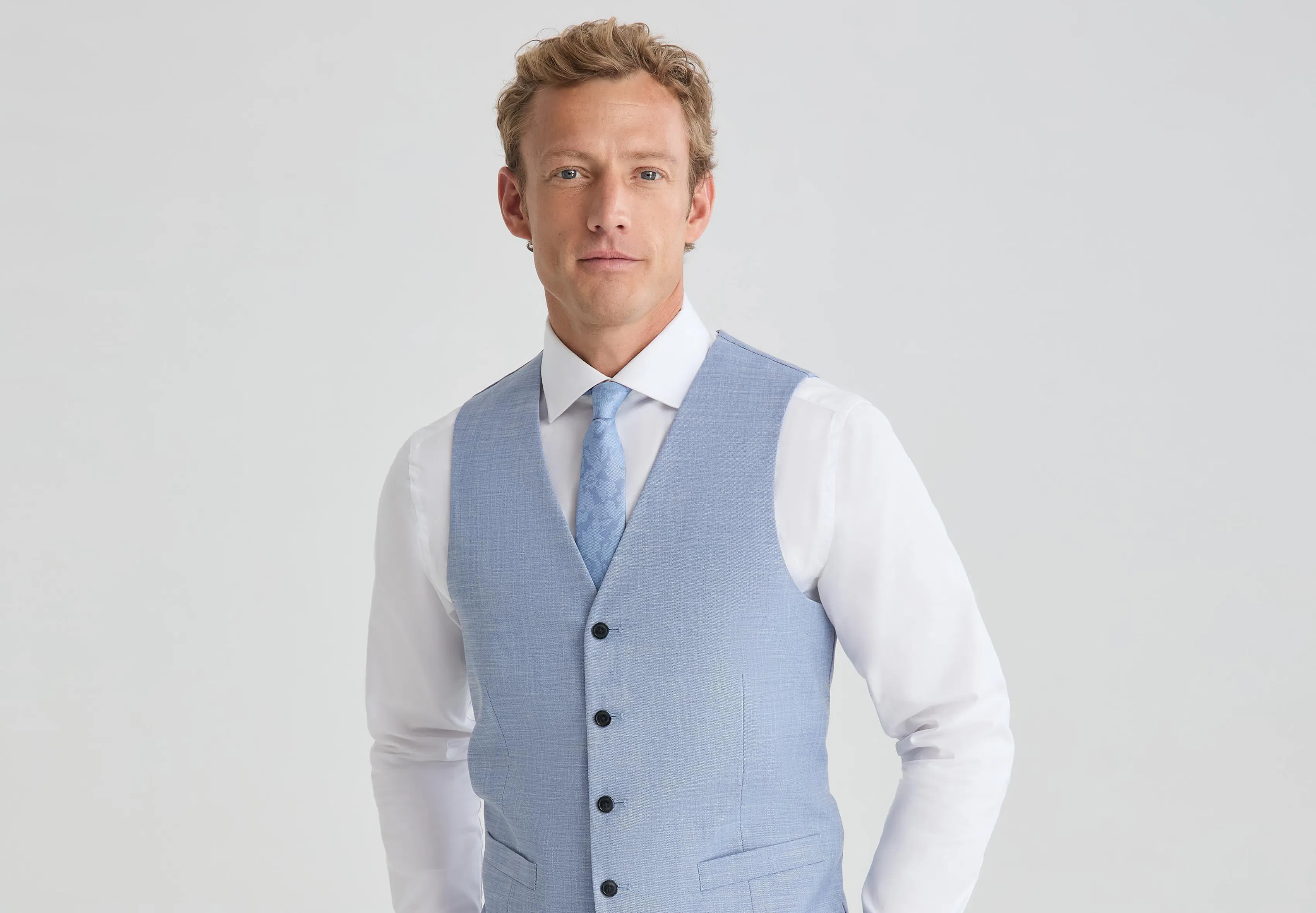
Building the Three-Piece Look for Your Wedding Day
Here is where the vocabulary lesson pays off for a formalwear shopper. Adding a vest turns a two-piece suit into a three-piece suit, the classic look for weddings, black tie, and formal events. It is also the easiest way to give a wedding party a coordinated, dapper-gentleman polish without buying entirely separate outfits.
A vest gives you flexibility on the day itself. Wear the full three-piece for the ceremony and photos, then drop the suit jacket at the reception and keep the vest on for a sharp look that still reads formal. Because SuitShop pieces are sized separately, the wedding party can match colors and styling while each person gets their own fit.


Find Your Vest at SuitShop
Whatever you call it, SuitShop has the vest to complete your look, and you buy it to keep rather than rent. Pair one with a matching suit for a true three-piece, or wear it as a standalone layer over a dress shirt.
A few easy ways to start:
- Browse the full range of suits and tuxedos in colors like navy, grey, and black to build your three-piece around a vest.
- Add finishing touches with accessories like ties, bow ties, and pocket squares.
- Coordinate a whole wedding party with group ordering, where five or more registered members ordering earns one free suit to keep.
Free fabric swatches, the online Fit Finder, and showrooms built for easy in-person fittings take the guesswork out of sizing. Start your order at SuitShop and build the three-piece look you will actually wear again.

Sean Parks
Sean Parks is a writer with a focus on men's suiting, formalwear, and personal style. Through his work with SuitShop, he has developed a deep understanding of suit fit, styling, wedding attire, and the details that help people feel confident in what they wear. A proud University of Georgia graduate with dual degrees in Public Relations and Communication Studies, Sean brings a research-driven approach to making suiting advice clear and approachable. When he's not writing about menswear, you'll find him logging miles on the Atlanta Beltline or playing the guitar on his back porch.
More Articles

The Vineyard Wedding Guide: Planning, Venues, and What to Expect
by Sean Parks September 30, 2026

Homecoming Suit Buying Guide: What to Look For and Where to Shop
by Sean Parks September 30, 2026



Customer Service
Contact Us
- Get In Touch
- Corporate Services
- +1 (773) 303-6006
- info@suitshop.com
Sign up for emails
© Copyright 2026 SuitShop