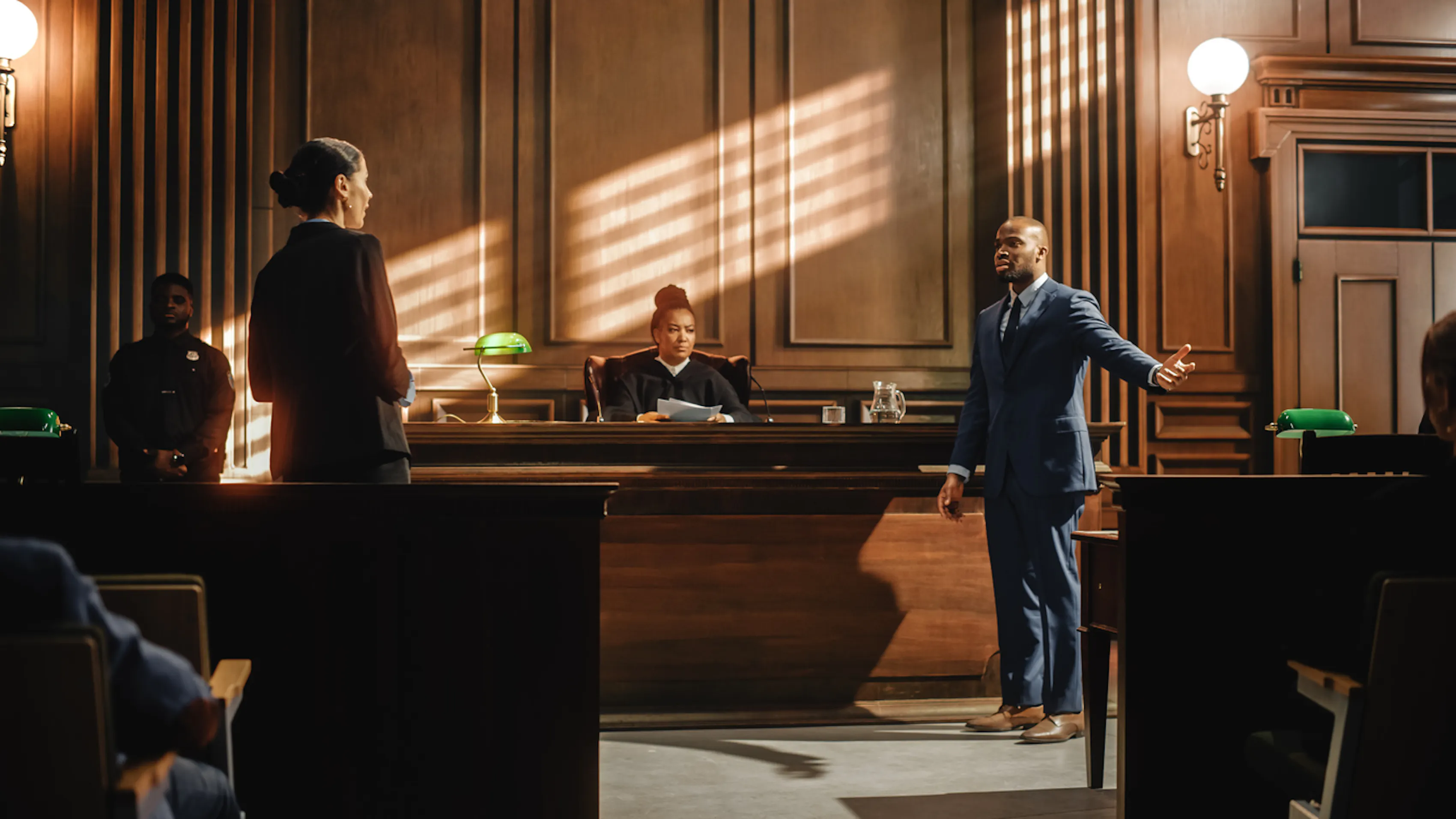
Your Courtroom Appearance Could Speak Before You Do
What you wear to a court proceeding carries real weight. Judges, juries, and opposing counsel all form impressions before a single word is spoken.
At a Glance:
- Courtroom attire should be clean, conservative, and professional regardless of your role
- Lawyers and attorneys should lean toward business attire or a full suit in neutral colors
- Defendants should dress as if interviewing for a job: neat, modest, and respectful
- Jurors should prioritize comfort within professional or business casual guidelines
- Avoid flashy jewelry, tank tops, halter tops, flip flops, and baggy pants in any courtroom setting
- What you wear communicates respect for the court system and can influence how you're perceived
Whether you're stepping into a courtroom for the first time or brushing up before a big case, understanding the dress code before your court date can make a meaningful difference. Here's a full breakdown by role.
Why Courtroom Attire Actually Matters
A courtroom is one of the few places left where appearance is still treated as a formal signal of respect. Judges have the authority to hold individuals in contempt for inappropriate attire, and while that's an extreme outcome, the subtler consequences happen constantly. A jury sizing up a defendant, a judge forming an impression of an attorney, a witness losing credibility before they speak. All of it starts with clothing.
Courtroom decorum isn't about fashion. It's about showing the court that you take the legal process seriously. The right outfit says you respect the space, the proceedings, and everyone in the room.
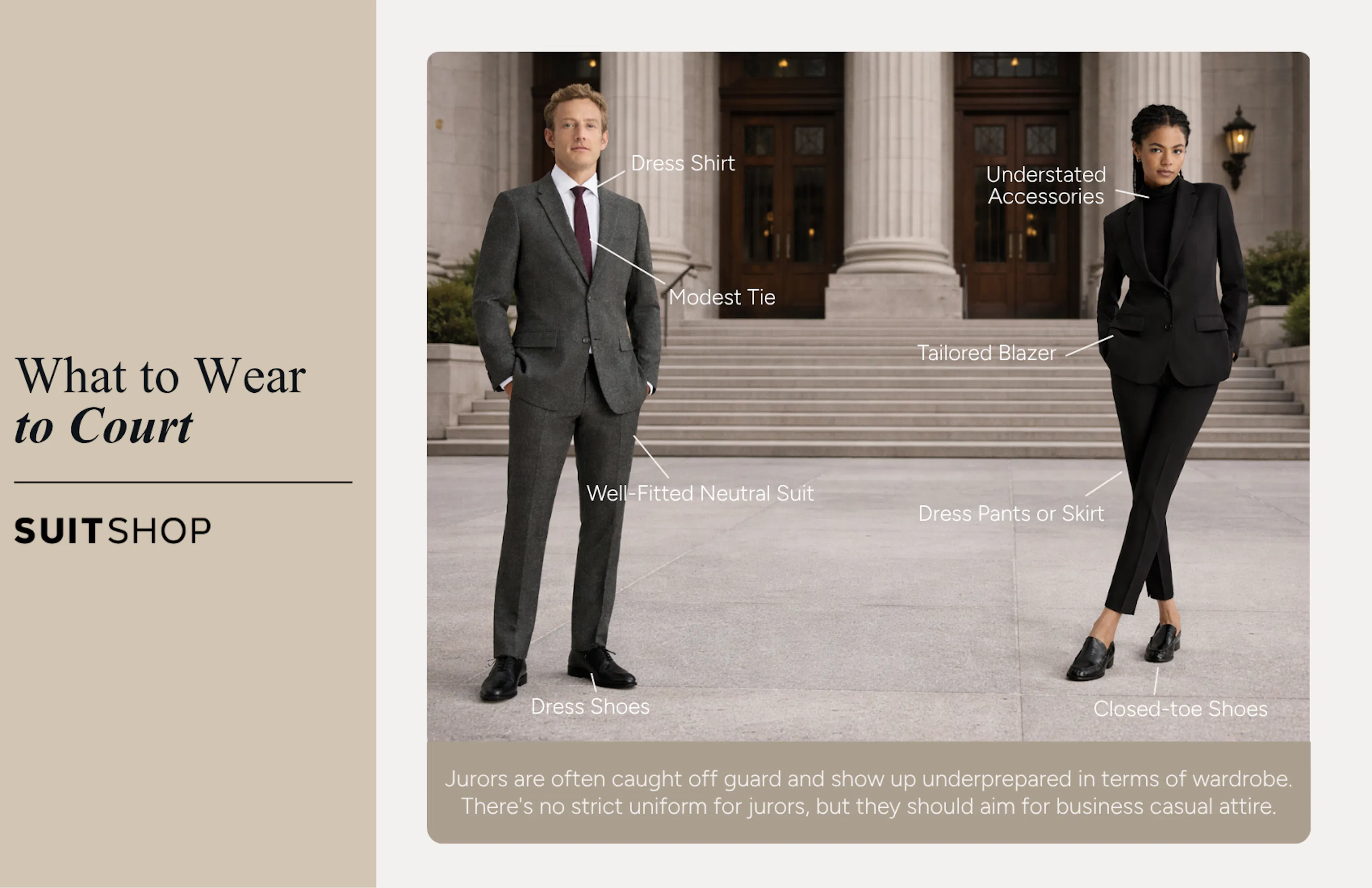
What Lawyers and Attorneys Should Wear to Court
For lawyers, dressing well in court is part of the job. Professional attire is expected and, in many courtrooms, quietly enforced through reputation and professional norms.
For Male-Presenting Attorneys:
- A well-fitted suit in navy, charcoal, or dark grey is the gold standard
- Pair it with a white or light blue dress shirt and a conservative tie
- Dress shoes in black or dark brown, polished and clean
- Avoid loud patterns, bold colors, or anything that draws attention away from your argument
- A subtle pattern on a tie is acceptable; a loud print is not
For Female-Presenting Attorneys:
- A tailored suit or blazer with dress pants or a knee-length skirt reads as polished and authoritative
- Neutral colors work best: black, navy, grey, or deep burgundy
- Keep jewelry understated — flashy jewelry can undermine an otherwise sharp look
- Closed-toe dress shoes are the standard
Newer lawyers especially benefit from owning a reliable suit rather than renting one. You'll wear it often, and fit matters more than price. Dress pants and suit jackets sized separately let you get the proportions right without compromising on either piece.
“The protocol in court for attorneys is still business professional so a business suit is always required/recommended. It’s considered a deference to the court to dress professionally at all times. Shorts, t-shirts, and hats are never acceptable and in some cases banned from courts.
Dress to impress and give deference to the court.”
— Denise Kay, Law Professional


What Defendants Should Wear to Court
If you're a defendant with an upcoming court date, your clothing choices can genuinely affect how the judge and jury perceive you. This applies in criminal cases, divorce proceedings, personal injury claims, motor vehicle accident cases, and beyond.
The guiding principle: dress like you're interviewing for a job you really want.
What to Wear:
- Dress pants or slacks in a neutral color (black, navy, khaki)
- A button-down shirt or blouse, tucked in and wrinkle-free
- A blazer or suit jacket if the case is serious or the setting is formal
- Clean, closed-toe shoes
- Minimal, tasteful accessories
What to Avoid:
- Tank tops, halter tops, or anything sleeveless
- Flip flops or athletic shoes
- Baggy pants or oversized clothing
- Flashy jewelry or accessories
- Anything with logos, graphics, or slogans
- Excessive cologne or perfume
Keep in mind that you'll likely pass through a metal detector at the courthouse. Avoid belts with large buckles, excessive metal jewelry, or anything that could slow you down or draw attention at security.
“I tell everybody before a trial, I'm not the fashion police but you need to dress professionally, you need to dress appropriately, and I'll often tie it to something that they know how to reference. [One of my clients] is a real estate agent, and she said, 'Well, how should I dress?' I said, 'Dress like you were showing your most expensive listing.'
They should look appropriate so that the jury gets a good impression of them, but most importantly, the jury doesn't focus on how bad they look."
— Richard Staggard, Attorney at Law
If you're unsure what level of formality to aim for, talk to your attorney. In high-stakes cases like felony criminal cases, a full suit sends a clearer message of respect than business casual alone.
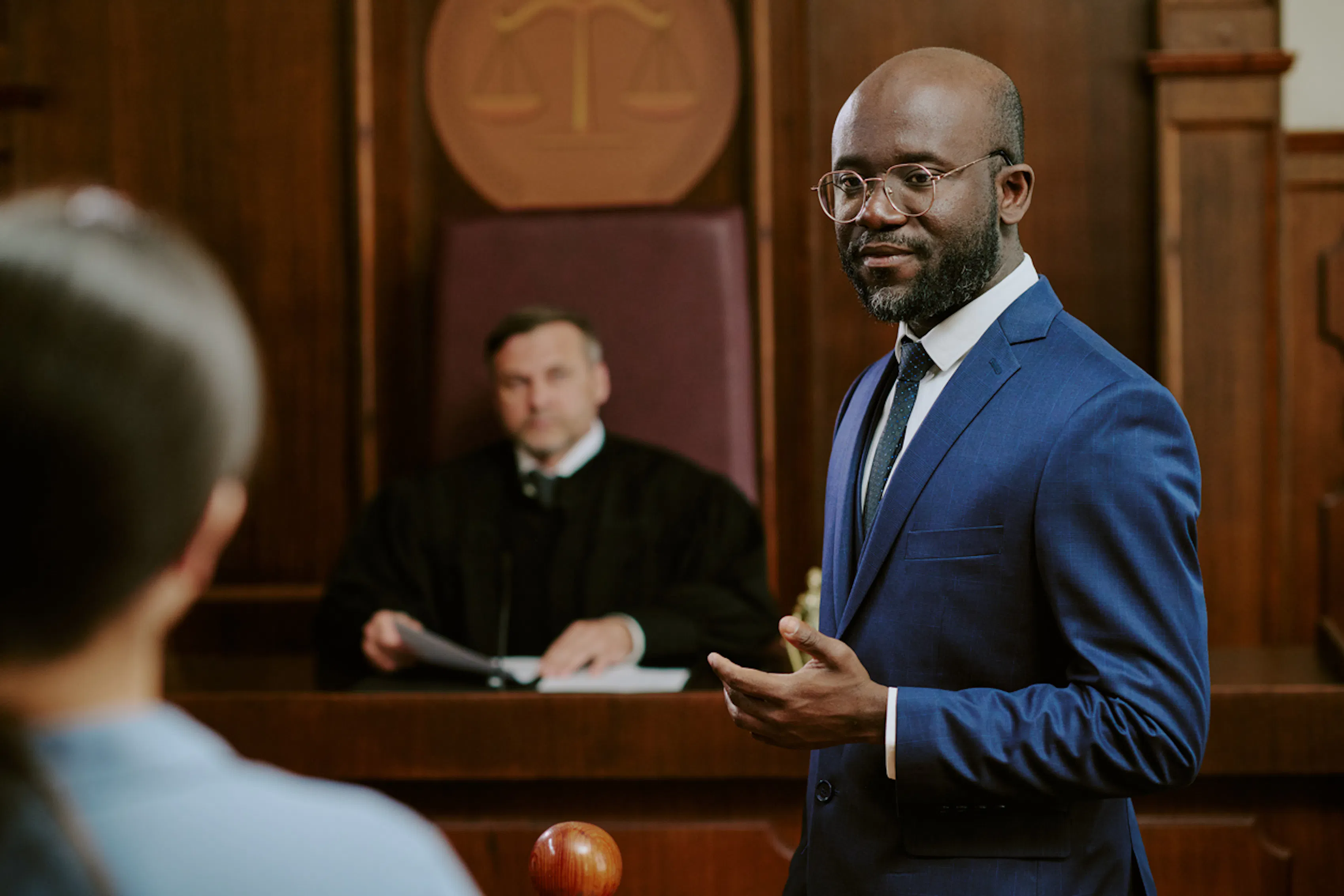
What Witnesses Should Wear to Court
Witnesses, including expert witnesses and character witnesses, are also subject to the informal dress code of the courtroom. The goal is credibility without distraction.
- Business casual to business attire is a safe range for most witnesses
- Avoid clothing that makes a statement or creates visual noise
- For expert witnesses in professional fields, a full suit or blazer projects authority
- For character witnesses, neat business casual is typically appropriate
- The same no-flip-flops, no-tank-top rules apply here
The same logic holds for video depositions. Even if you're appearing on screen rather than in person, dress as if you're physically present in the courtroom. Judges and attorneys take video appearances just as seriously.
What Jurors Should Wear for Jury Service
Jurors are often caught off guard by jury service and show up underprepared in terms of both logistics and wardrobe. There's no strict uniform for jurors, but the setting calls for a certain level of respect.
Practical Guidelines for Jury Service:
- Business casual is the right target: dress pants or neat slacks, a collared shirt or blouse
- Comfortable footwear matters since jury service can mean long days on hard chairs
- Avoid clothing with strong political statements, logos, or graphics that could compromise the appearance of impartiality
- Leave the flashy jewelry and overly casual attire at home
- Dress as though you're meeting someone important for the first time
You won't be presenting your case, but you are part of a formal legal process. Dressing with care reflects well on you and signals to the court that you're taking the responsibility seriously.


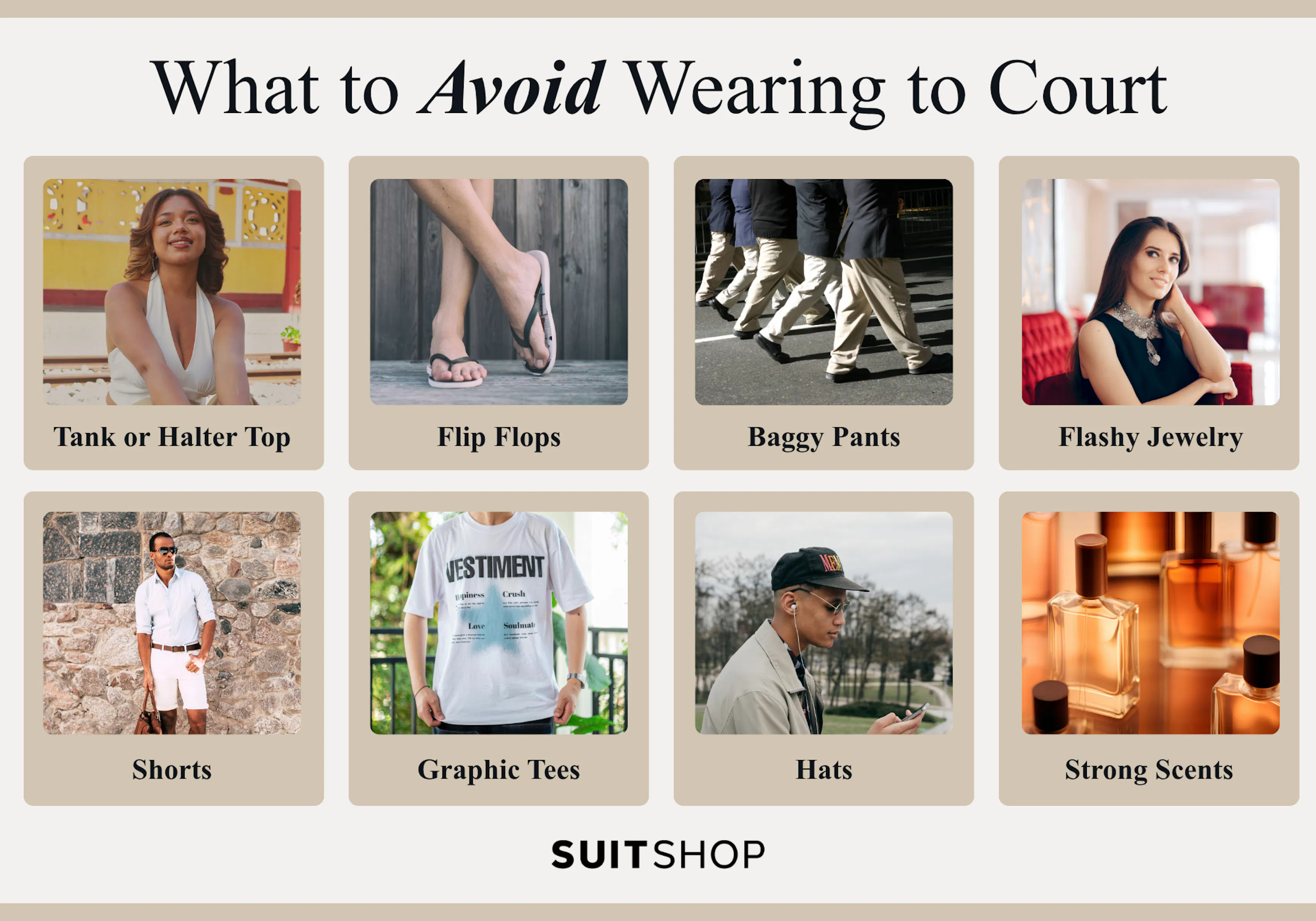
A Quick Reference: What to Avoid in Any Courtroom
Regardless of your role, some clothing items are universally inappropriate for court proceedings:
- Tank tops and halter tops — too casual and often explicitly prohibited
- Flip flops — inappropriate for the setting in virtually any jurisdiction
- Baggy pants — reads as disrespectful and careless
- Flashy jewelry — distracting and can read as arrogant depending on context
- Shorts — almost never appropriate in a formal court setting
- Graphic tees or clothing with visible logos — creates distractions and can send unintended messages
- Hats or head coverings (except for religious purposes) — generally discouraged unless protected by religious exemption
- Strong scents — courtrooms are enclosed spaces shared with many people
A cell phone in your pocket is fine, but keep it silenced and out of sight. An electronic device used during proceedings or audibly going off in court is a quick way to irritate a judge.
From the Courthouse to The Rest of Your Life
The same qualities that make a suit work in a courtroom, fit, breathability, a clean silhouette, make it work beautifully for warm-weather and outdoor weddings as well. A well-fitted suit in a lighter tone or a more relaxed fabric handles both occasions gracefully. If you're shopping for court-appropriate attire, you're likely one or two styling decisions away from having a strong wedding guest outfit or even a wedding party look in your closet too.
Lightweight, breathable suiting has become a go-to for daytime weddings and outdoor ceremonies where comfort matters as much as polish. The same investment that helps you look credible in front of a judge can carry you straight through a summer wedding season.
Shop Your Court-Ready Look at SuitShop
When you need to look polished, put-together, and appropriate for any formal setting, SuitShop has everything you need. From suits and tuxedos in a wide range of fits and neutral colors to dress shirts, ties, dress shoes, and accessories, every piece is designed to be owned, worn, and relied on across real occasions.
Pieces are sized separately so you can mix and match for the fit that actually works for your frame, whether that's a slim silhouette for a courtroom appearance or something with more ease for a long day of jury service. Free fabric swatches, an online Fit Finder, and easy returns make the process simple even if you're putting together a court outfit for the first time.
Find your look today at SuitShop.

Sean Parks
Sean Parks is a writer with a focus on men's suiting, formalwear, and personal style. Through his work with SuitShop, he has developed a deep understanding of suit fit, styling, wedding attire, and the details that help people feel confident in what they wear. A proud University of Georgia graduate with dual degrees in Public Relations and Communication Studies, Sean brings a research-driven approach to making suiting advice clear and approachable. When he's not writing about menswear, you'll find him logging miles on the Atlanta Beltline or playing the guitar on his back porch.
More Articles

The Vineyard Wedding Guide: Planning, Venues, and What to Expect
by Sean Parks September 30, 2026

Homecoming Suit Buying Guide: What to Look For and Where to Shop
by Sean Parks September 30, 2026



Customer Service
Contact Us
- Get In Touch
- Corporate Services
- +1 (773) 303-6006
- info@suitshop.com
Sign up for emails
© Copyright 2026 SuitShop