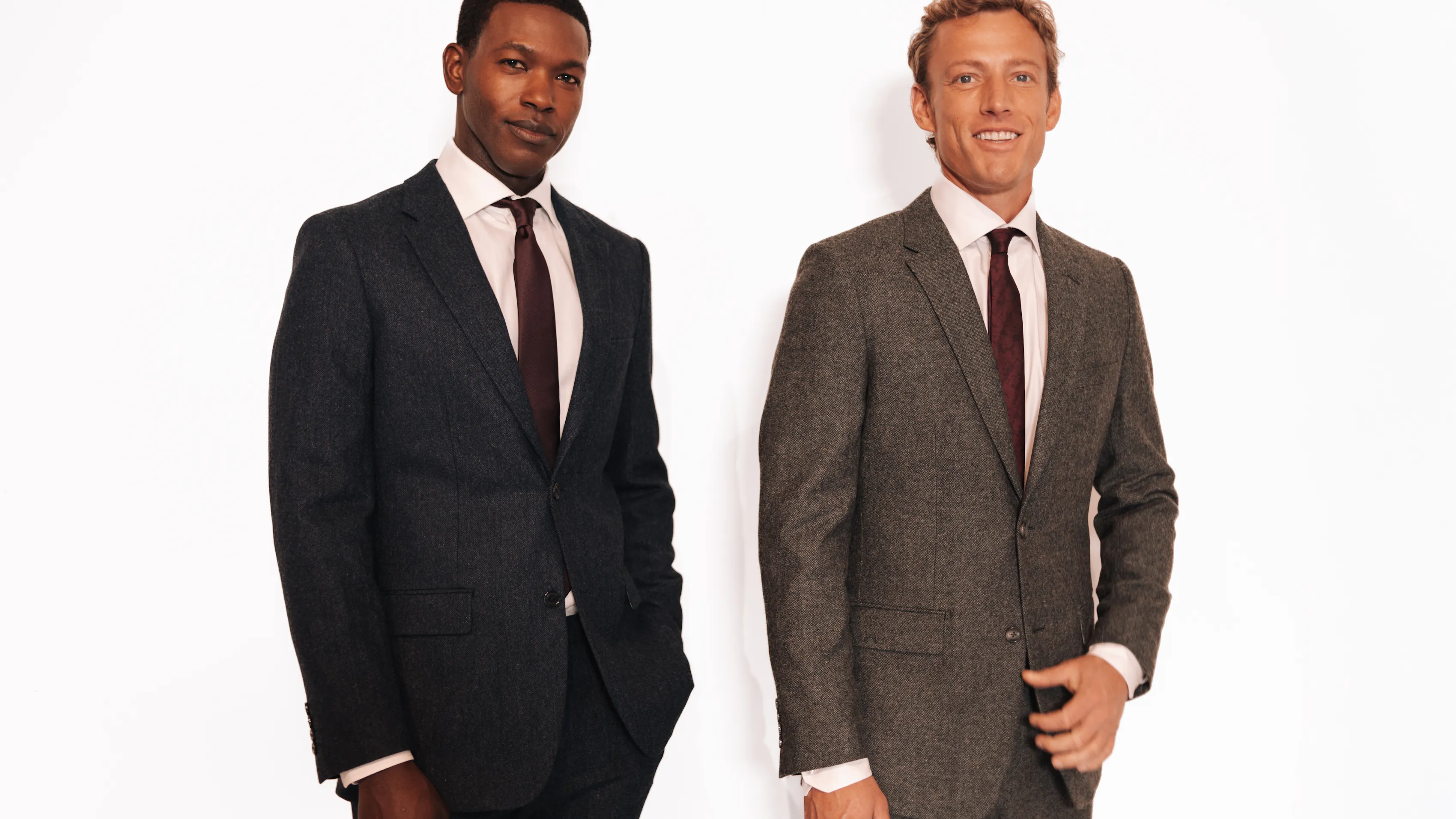
The Fit Points That Separate a Sharp Suit from a Sloppy One
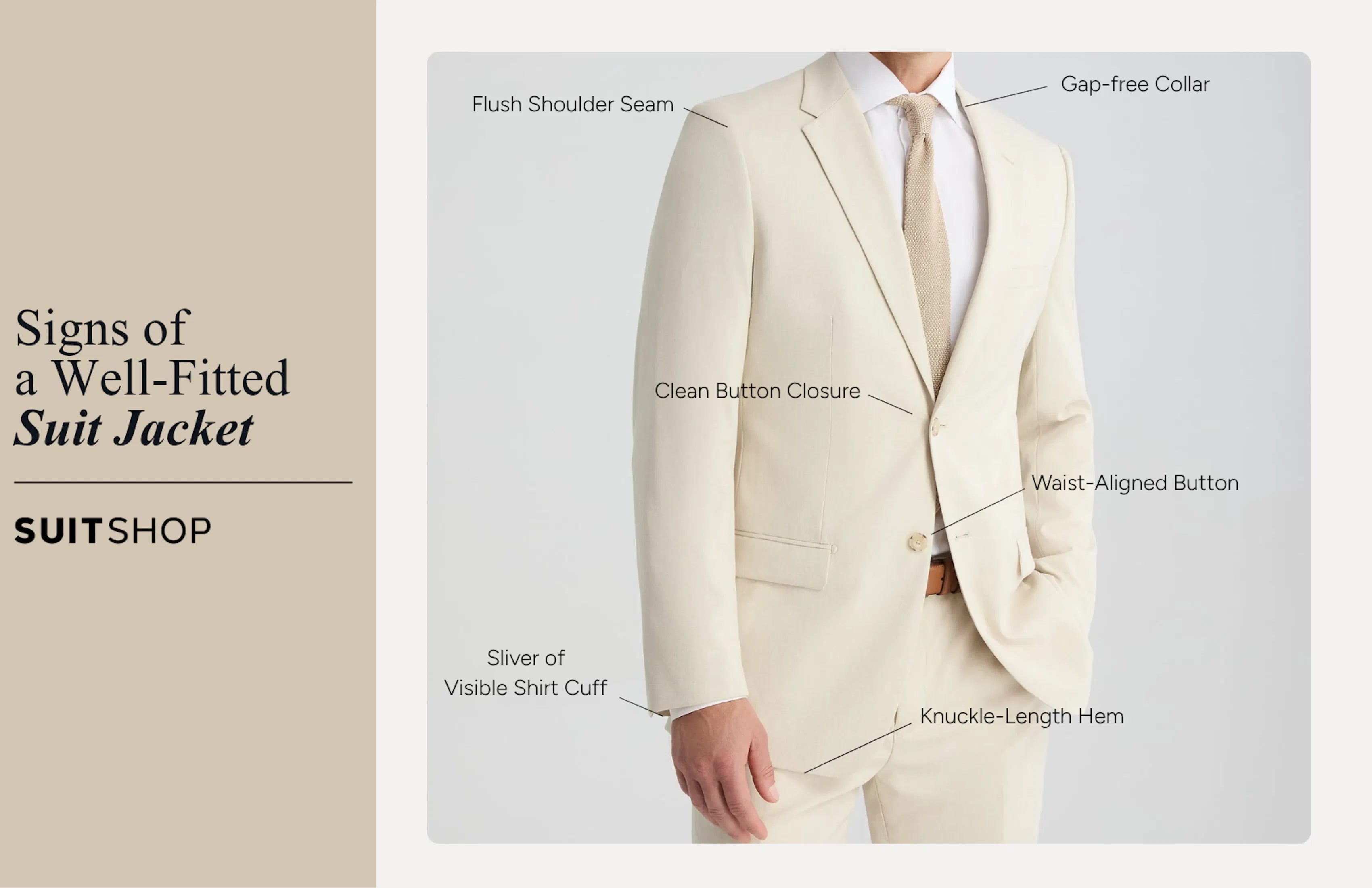
A well-fitted suit jacket rests cleanly on the shoulders, skims the chest without pulling, and falls to the right length without covering the seat. Nail those benchmarks and the rest of the look follows.
At a Glance:
- The shoulder seam should sit exactly at the edge of your actual shoulder, not past it or toward the neck.
- The jacket chest should close without pulling, with room for a flat hand to slide inside.
- Jacket length should cover the top of the seat and reach roughly to the knuckles of your relaxed, hanging hand.
- Sleeve length should land about a half-inch above the shirt cuff, showing roughly a quarter to half inch of shirt sleeve.
- The collar of the jacket should lie flat against the shirt collar with no collar gap.
- The top button should sit at or near the natural waist, which falls close to the belly button.
- Horizontal wrinkles across the back or chest usually signal a size issue worth addressing.
Getting to a perfect fit starts before you even try a jacket on. Using a branded size calculator or measurement chart is the best way to guarantee a great suit jacket fit. SuitShop's Fit Finder asks a few straightforward questions about your height, weight, and typical clothing sizes and returns a size recommendation in under 60 seconds. The Fit Guide breaks down every fit type in detail and offers size charts, so you know exactly what you're ordering before it arrives.
Why Getting the Fit Right Actually Matters
A suit jacket that fits well does not need to be expensive, made-to-measure, or altered by a skilled tailor to look polished. The single biggest variable is proportions. A jacket with quality construction, like well-made fused construction, canvas, or half-canvas will drape beautifully if the sizing is right. The same jacket in the wrong size will look sloppy regardless of price. Research from the fashion and menswear industry consistently shows that fit is the number one factor consumers use to evaluate how professional or attractive a suit looks, ahead of color, brand, or fabric.
Beyond that, what you wear impacts what you feel. A suit jacket that fits correctly can make you feel like you’re the best looking person in the room (and it will probably be true, too).
Start at the Shoulders: The One Place You Can't Tailor Easily
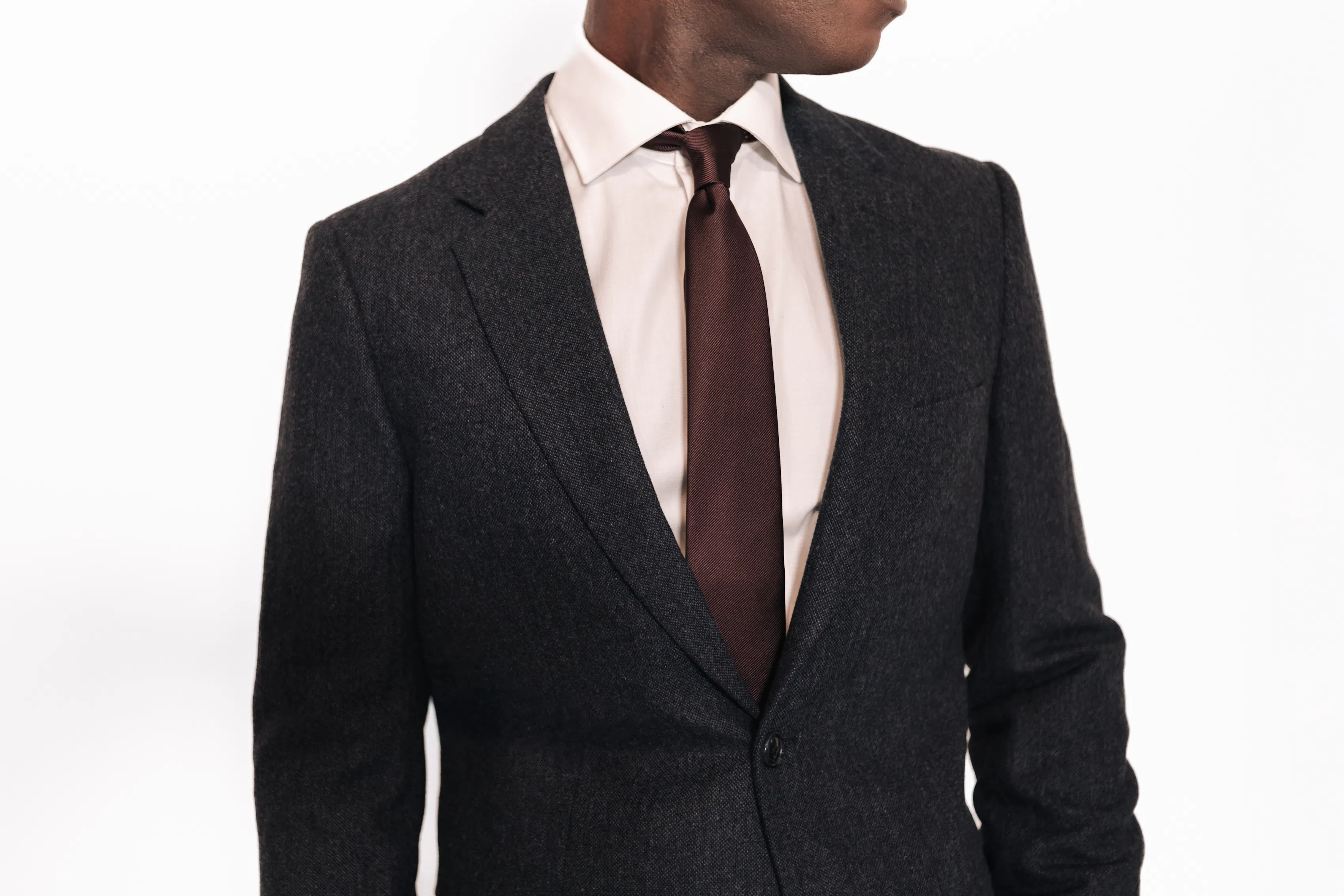
The shoulder is the most important part of a suit jacket fit. The shoulder seam should land exactly where your actual shoulder ends and your arm begins. No exceptions. If the seam hangs over the arm, the jacket is too large. If it sits short of the shoulder edge and pulls upward, the jacket is too small.
This is the single point of a suit jacket that is genuinely difficult and expensive for a tailor to fix after the fact. A skilled tailor can take in a waist, shorten a sleeve, or adjust a hem, but restructuring a shoulder requires disassembling much of the jacket. When in doubt about sizing, prioritize getting the shoulder seam right, then evaluate the rest.
Watch for these jacket shoulder fit signals:
- Shoulder pad overhang: The fabric extends past your arm joint, giving a slope-shouldered, oversized appearance
- Divots or dimples near the sleeve cap: usually indicates the shoulder is slightly too narrow
- Collar gap: When the jacket collar pulls away from the shirt collar at the back, this often traces back to a shoulder or upper back fit issue
Chest and Body: Buttoned Should Not Mean Strained
When you button a suit jacket, the front should close cleanly without the lapels pulling open or horizontal wrinkles spreading across the chest. A general rule of thumb: you should be able to slide one flat hand inside the buttoned jacket without the fabric pulling tight. If you need to suck in to button it, or if the button stance creates an X-shaped pull across the chest, the jacket is too small in the chest.
At the same time, excess fabric pooling at the sides or bagging around the midsection means the chest is too large, even if the shoulders fit.
The amount of room from the shoulders through the waist depends heavily on which fit type you choose–in other words, your body type, not your style preference, determines the fit type that’s best for you.
SuitShop's Men's Slim Fit is designed to taper closely through the waist for a V-shaped, athletic silhouette. The Men's Modern Fit runs with a straighter cut from the shoulders through the waist, offering more room through the midsection without any boxy or dated look.
These are not two different styles aesthetically; Slim and Modern offer the same classic silhouette cut to flatter different body shapes. If you hear someone refer to a "regular fit" suit, that is typically a straighter, less fitted style.
Fit Type | Body Shape It Suits Best | Silhouette |
Men's Slim Fit | V-shaped, narrower waist, lean build | Closely tapered through body |
Men's Modern Fit | Athletic, broader midsection, larger upper body | Straighter through waist, more room |
Women's Fit | Feminine frame, hourglass shaping | Cinched waist, close-fitting drape |
Unisex Fit | Wider range of bodies, nonbinary, androgynous looks | Structured shoulder, less waist taper |
For a complete comparison of cut and sizing across all four fit types, the Fit Guide walks through each one side by side.
Jacket Length: Cover the Seat, Follow the Knuckle Rule
A suit jacket should cover the seat of your trousers fully. Beyond that, a classic benchmark is the knuckle rule: when your arms hang naturally at your sides, the bottom of the jacket should hit roughly at your knuckles. This lands most jackets at about mid-seat to the bottom of the seat on most men.
Jacket length also affects perceived body proportions. A jacket that is too short visually shortens the torso and draws attention to the legs. One that is too long can shorten the appearance of the legs, particularly for shorter builds.
Sleeve Length: Show the Shirt Cuff
The jacket sleeve should end approximately a half-inch above the shirt cuff. This typically means about a quarter to half inch of the dress shirt sleeve is visible below the jacket. The exact amount is partly personal preference, but the goal is a clean line with a small deliberate reveal of the shirt.
A jacket sleeve that covers the entire shirt cuff makes the arms look longer and the jacket look oversized. A sleeve that ends well above the shirt cuff looks unfinished. Either way, sleeve length is one of the easier alterations for a tailor to make if needed, so it is a low-stakes issue if the rest of the jacket fits.
Back, Collar, and the Details That Signal a Bad Fit
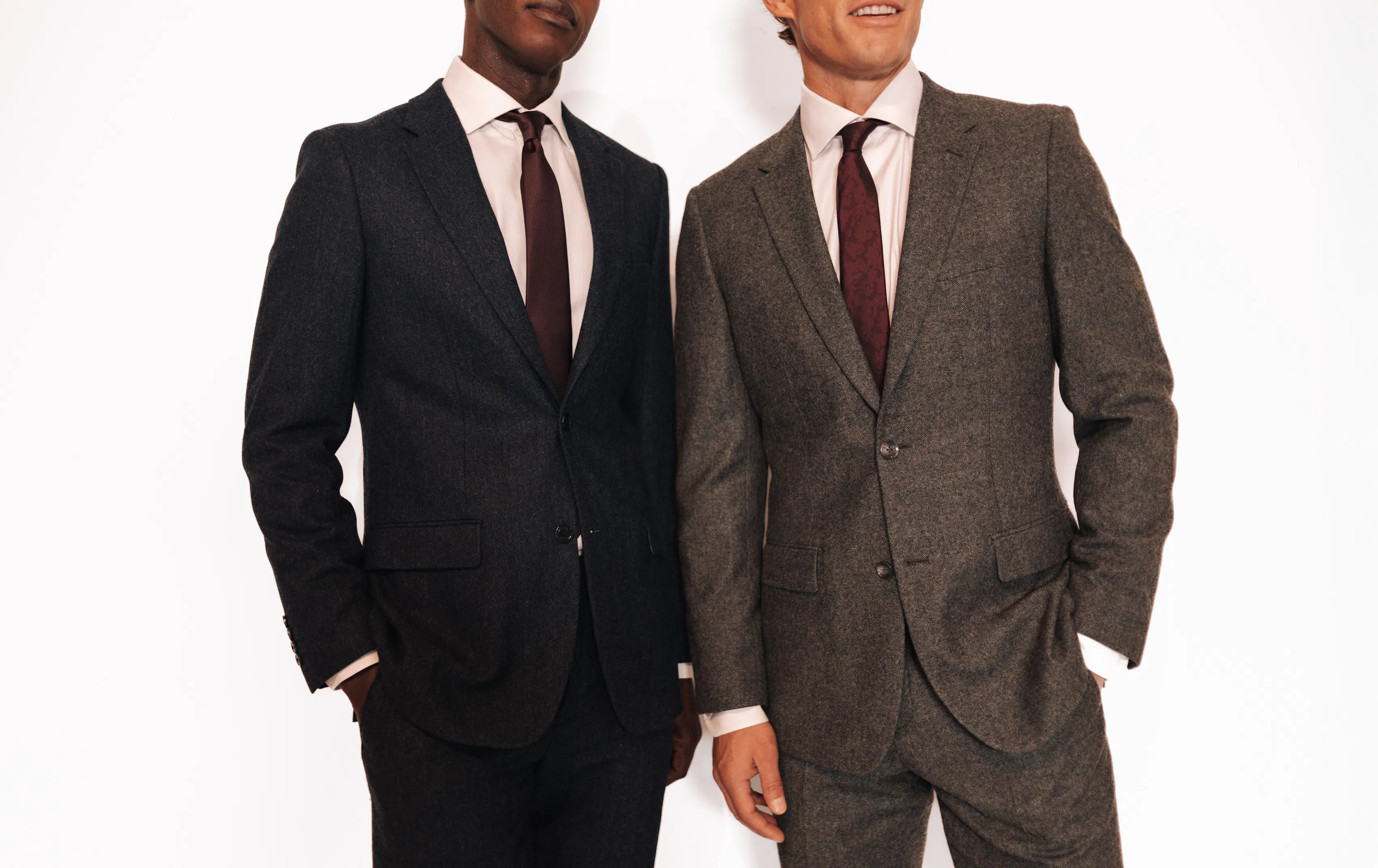
When you view a jacket from behind, the back should lie flat with no horizontal wrinkles pulling across the shoulder blades. Horizontal wrinkles through the upper back usually mean the jacket is too tight through the chest or upper body. Vertical folds or excess fabric pooling usually indicate a size too large.
The jacket collar should sit flat and flush against the shirt collar with no collar gap. A collar gap (where the back collar lifts away from the shirt) can indicate that the jacket is too large in the upper back or that there is a mismatch between the shoulder and back proportions.
The collar roll on a notch lapel should be smooth and even, and the top button of a two-button jacket should fall at or near the natural waist, roughly in line with the belly button. On a three-button jacket, the middle button performs this function and is the primary buttoning point.
When the Standard Rules Don't Apply
Not every body fits neatly into standard suit jacket proportions, and that is normal. A few situations where the usual rules need to flex:
- Athletic builds: Broad shoulders and a narrow waist can mean that a jacket fitting the shoulders will pull through the chest, or vice versa. In this case, fitting to the shoulders and having a tailor take in the waist is often the right call. SuitShop's Slim Fit is designed with this in mind.
- Long arms: If sleeve length is consistently an issue across different jacket sizes, this is a common alteration. Sizing to the shoulder and chest first, then adjusting sleeve length, is generally the right sequence.
- Different proportions in the upper and lower body: Because SuitShop jackets and suit pants are sized separately, you can order a larger jacket and a smaller pant (or vice versa) without being locked into a pre-packaged set. This is one of the biggest practical advantages of buying rather than renting.
- Rack suits vs. a different size combination: Off-the-rack sizing assumes certain proportions. When those assumptions do not match your body shape, mixing sizes across jacket and pants is not a workaround. It is the intended approach.
Suit Jacket Fit for Weddings: Getting It Right Across a Whole Group
Wedding attire raises the stakes on jacket fit because multiple people are wearing the same suits in the same photos on the same day. A bad fit is more visible when it is standing next to a great one. For groomsmen, wedding party members, and anyone coordinating group suiting, getting each person into the right size matters as much as picking the right color or style.
The most common group fit mistake is assuming that everyone in the same general size range wears the same jacket size. Body shape, shoulder width, and chest-to-waist ratio vary enough between individuals that two people with the same chest measurement may need different fit types entirely. One person might find Modern Fit hits all the benchmarks, while another with a more tapered build wears the same size in Slim and gets a better result.
SuitShop's wedding attire options include suits and tuxedos in a wide range of colors, from navy and charcoal to tan and green, across all four fit types. Jackets and suit pants are sized separately so every member of the wedding party can find their own right combination without being locked into anyone else's sizing.


Ready to Find Your Fit? SuitShop Makes It Simple.
Knowing how a suit jacket should fit is the first step. The next one is finding the size and fit type that gets you there.
SuitShop's Fit Finder delivers a personalized size recommendation in about 60 seconds, no tape measure required. Free returns and exchanges mean there is no risk in trying a size at home. And because jackets and pants are sized separately, you are not locked into any pre-packaged combination.
Here is what to do next:
- Take the Fit Finder to get your size recommendation in under a minute
- Review the Fit Guide to compare Slim, Modern, Women's, and Unisex fit types side by side
- Order free fabric swatches to preview colors before committing
- Browse men's suits and start building your look
- Planning a wedding? When 5 or more members of your wedding party order, one person gets a free suit or tux, yours to keep.
The fit is out there. This is where you find it.

Sean Parks
Sean Parks is a writer with a focus on men's suiting, formalwear, and personal style. Through his work with SuitShop, he has developed a deep understanding of suit fit, styling, wedding attire, and the details that help people feel confident in what they wear. A proud University of Georgia graduate with dual degrees in Public Relations and Communication Studies, Sean brings a research-driven approach to making suiting advice clear and approachable. When he's not writing about menswear, you'll find him logging miles on the Atlanta Beltline or playing the guitar on his back porch.
More Articles

The Vineyard Wedding Guide: Planning, Venues, and What to Expect
by Sean Parks September 30, 2026

Homecoming Suit Buying Guide: What to Look For and Where to Shop
by Sean Parks September 30, 2026



Customer Service
Contact Us
- Get In Touch
- Corporate Services
- +1 (773) 303-6006
- info@suitshop.com
Sign up for emails
© Copyright 2026 SuitShop