
The Quick Math on Wedding Generosity
Figuring out the right wedding gift amount can feel like solving a puzzle with missing pieces. Let’s break down the wedding gift etiquette.
At a Glance:
- Most wedding guests spend between $75 and $200 on a gift, with the average landing around $100 to $150
- Your relationship to the couple matters most when determining your budget
- Your role in the wedding, whether you’re a guest, a groomsman, the maid of honor, or other, can impact the most appropriate amount to spend on the gift
- Close family members and best friends typically give more generous gifts
- Attending a destination wedding or giving an engagement gift may affect your wedding day contribution
- Your personal budget should always be the final deciding factor
- Group gifts offer a practical solution for expensive registry items
Wedding gift spending has evolved over the years, but one thing remains constant: the goal is to celebrate the happy couple in a way that feels meaningful to both you and them. Let's break down exactly how to navigate this common dilemma so you can show up to the big day confident in your choice.
The Standard Wedding Gift Amount
What is standard to spend on a wedding gift? Most wedding guests spend somewhere between $100 and $150 on a gift. However, this general guideline shifts based on several factors, and there's really no single "correct" answer.
Think of the $100 to $150 range as a starting point rather than a strict rule. From there, you can adjust up or down based on your circumstances, your relationship with the couple, and what makes sense for your financial situation.
The old tradition of "covering your plate" (giving enough to cover the cost of your meal at the reception) still influences some gift-giving decisions. While a sit-down dinner at a big wedding can often cost the couple more than $150 per guest, you shouldn't feel obligated to match that number if it stretches your budget.
How Your Relationship Affects the Gift Amount
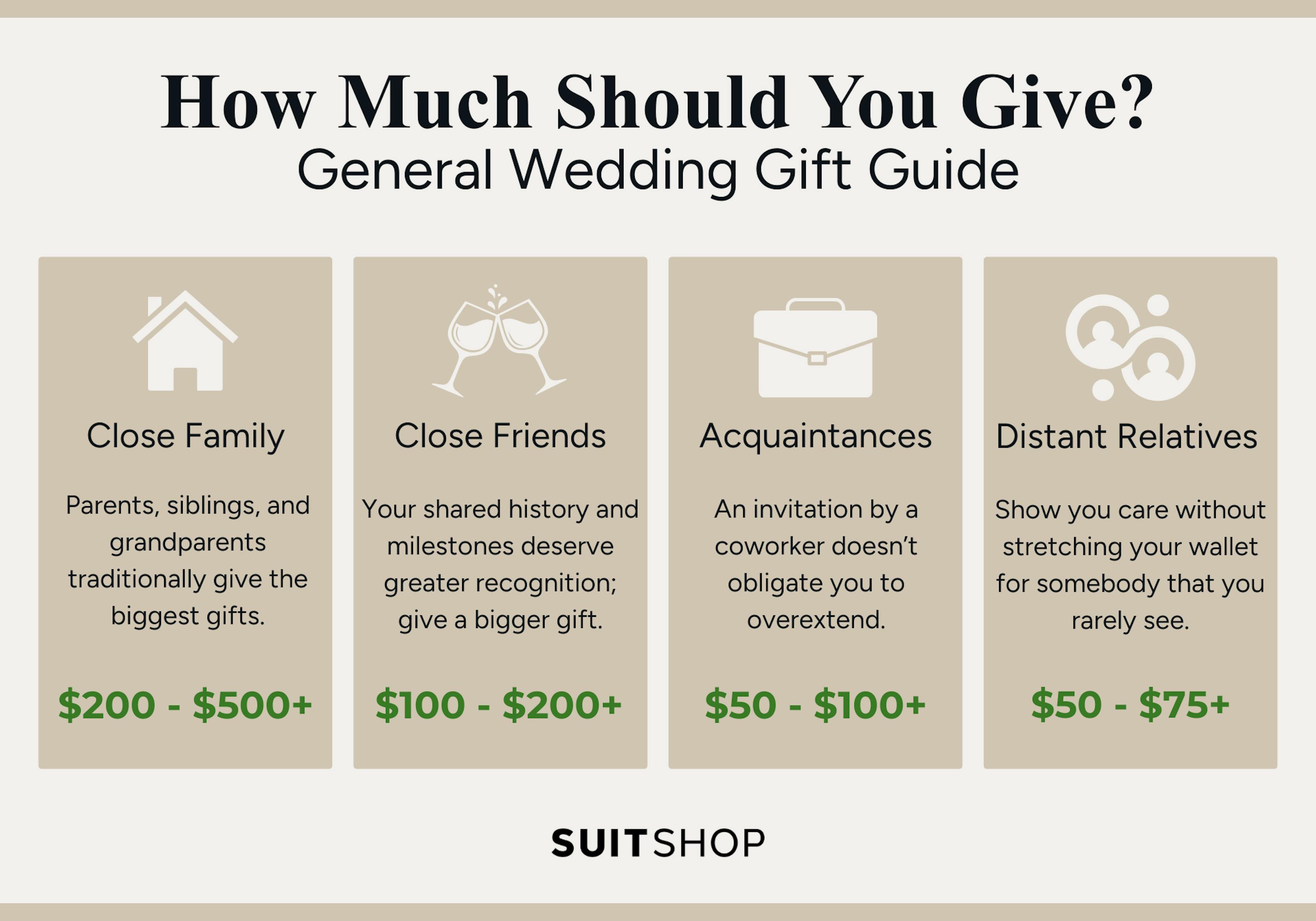
Your connection to the couple is the biggest factor in determining an appropriate wedding gift amount. Here's how different relationships typically translate to different amounts:
Close Family Members
Parents, siblings, and grandparents often give the most substantial gifts, ranging from $200 to $500 or more. This reflects both the close relationship and the traditional role of family in supporting newlyweds as they start their life together.
Close Friends and Best Friends
For a close friend or best friend, expect to spend between $100 and $200. These are the people you've celebrated milestones with, so it makes sense that your gift reflects that history.
Coworkers and Acquaintances
If you're attending the wedding of a colleague or someone you don't know as well, a gift in the $50 to $100 range is perfectly appropriate. The wedding invitation alone doesn't obligate you to spend beyond your comfort level.
Distant Relatives
That cousin you see once every few years at family reunions? A smaller gift of $50 to $75 shows you care without overextending yourself for someone you rarely interact with.
Special Circumstances That Change the Equation
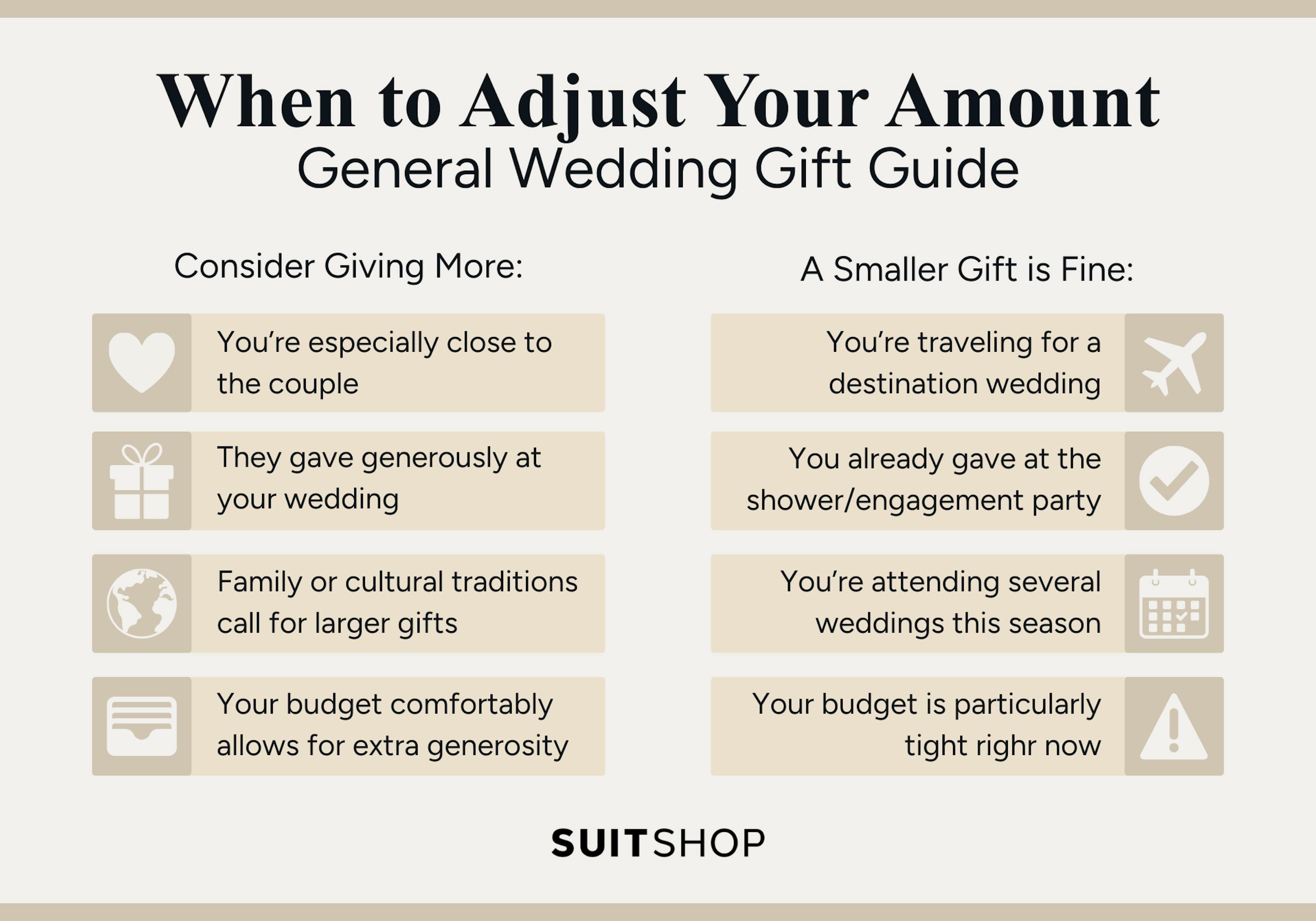
Sometimes the standard guidelines need adjusting. Here are situations where you might give more, less, or handle things differently:
When You Might Give More:
- You're in the wedding party and want to go above and beyond
- The couple helped you significantly in the past (perhaps gave a generous gift at your own wedding)
- You have a particularly close relationship and your financial situation allows for extra generosity
- The wedding is occurring in an especially expensive urban area, or you or the couple live in such an area
- Cultural traditions in your family or community call for larger gifts
When a Smaller Gift Makes Sense:
- You already gave an engagement gift at the engagement party or a present at the bridal shower
- You're traveling for a destination wedding (travel costs can count as part of your gift)
- Your personal budget is tight, and the couple would rather have you there than receive an expensive gift
- You're attending multiple weddings during wedding season
When You Might Skip a Gift Entirely:
- You received a wedding invitation but cannot attend and don't have a close relationship with the couple
- Financial hardship makes even a small gift difficult (a heartfelt card is always acceptable)
Cash vs. Physical Gifts: What Couples Actually Want
The debate between a cash wedding gift and a physical gift from the gift registry has a clear winner in most modern weddings: couples generally prefer cash.
A cash gift offers flexibility. The happy couple can put it toward their honeymoon fund, use it for a down payment on a home, or cover expenses from the wedding itself. Many wedding websites now include options for contributing to specific funds rather than traditional registries.
That said, some guests prefer giving a tangible wedding present, and there's nothing wrong with that approach. If you go the registry item route, consider:
- Choosing something you know the couple will use and appreciate
- Pooling resources with others for a group gift if you want to purchase a more expensive item
- Adding a personal touch like a handwritten note explaining why you chose that particular gift
The Wedding Party Perspective
If you're a bridesmaid, groomsman, or otherwise part of the wedding party, you've likely already spent money on attire, travel, and pre-wedding events. Does that change your gift obligation?
The short answer: yes, and most couples understand this completely.
Being in the wedding party comes with built-in costs. Between your bridesmaid dress or groomsman suit, the bachelor or bachelorette party, the bridal shower, and other expenses, you've already invested significantly in celebrating the couple. A gift on the lower end of the spectrum (or even a heartfelt card) is completely acceptable.
On the other hand, most wedding party members are especially close friends with the couple, so bridesmaids, groomsmen, maids of honor, best men, and other bridal party members may prefer to give even more to represent that close relationship.
Many wedding party members choose to go in on a group gift together, which allows everyone to contribute something meaningful without breaking individual budgets.
Navigating Destination Weddings
Destination weddings deserve their own category because the financial commitment of attending is substantial. Flights, hotels, time off work, and other travel expenses add up quickly.
Etiquette experts generally agree that your presence at a destination wedding counts as a significant gift in itself. A smaller gift of $50 to $75 (or even just a thoughtful card) is entirely appropriate when you've already spent hundreds or thousands of dollars to be there.
Some guests choose to send an appropriate gift closer to the actual wedding date rather than bringing something on the trip, which also simplifies travel logistics.
When Multiple Events Are Involved
Modern wedding celebrations often span multiple events. You might attend an engagement party, bridal shower, and the wedding itself, each with its own gift-giving expectations.
Here's a practical approach:
- Engagement Party: A smaller gift or card is typical. Save your bigger contribution for the wedding.
- Bridal Shower: Gifts here are usually more personal or practical, often in the $25 to $75 range.
- The Wedding: Your primary gift. The amounts discussed throughout this article apply here.
You don't need to give a substantial gift at every event. Many guests give modest presents at earlier celebrations and reserve their main wedding gift amount for the big day itself.
Always Lead with Your Budget
Here's the most important piece of wedding gift etiquette that sometimes gets lost in discussions about averages and expectations: your personal budget comes first.
No couple wants their wedding guest to go into debt over a gift. A thoughtful card explaining how much you value the couple costs almost nothing and often means more than an expensive registry item chosen out of obligation.
If money is tight:
- Write a meaningful, personal card
- Offer your time or skills as a gift (photography, baking, babysitting for the honeymoon)
- Contribute what you can afford without apology
- Consider a small but thoughtful gift that reflects your relationship
The happy couple invited you because they want you there, not because they're counting on your contribution to fund their new kitchen appliances.
Dress the Part While You Celebrate
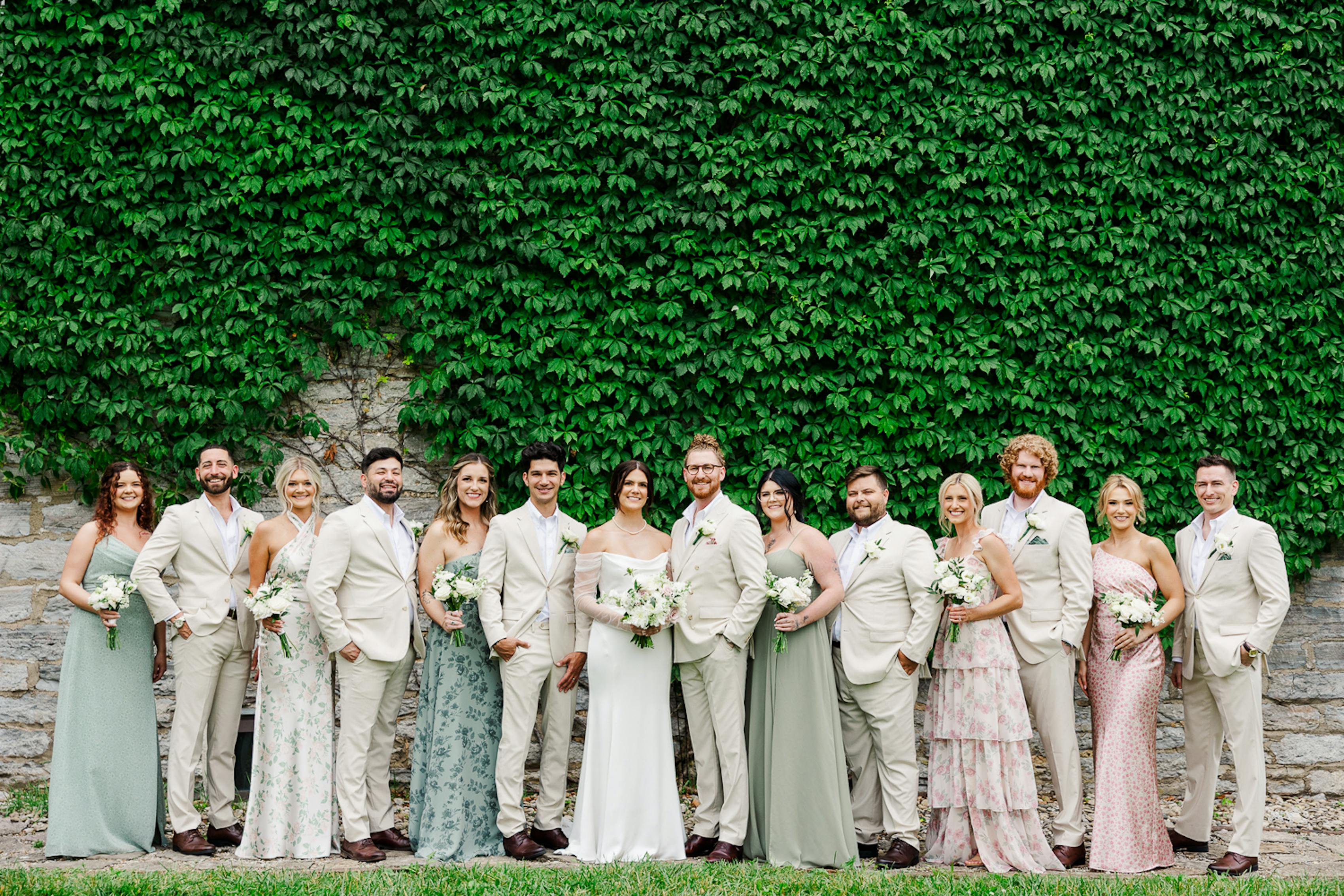
Once you've sorted out the perfect gift, there's one more detail to consider: what you'll wear to celebrate the couple's big day. Looking polished as a wedding guest shows respect for the occasion and helps create the memorable atmosphere the couple has worked hard to plan.
Whether the dress code calls for black-tie formality or something more relaxed, having a suit or tuxedo you actually own (rather than a rental that never quite fits right) makes a difference. Options like a classic navy suit work for everything from summer garden ceremonies to elegant evening receptions, while a sharp black tuxedo handles the most formal invitations with style.


Celebrate in Style with SuitShop
Finding the right gift amount matters, but so does showing up looking your best. AtSuitShop, you'll find suits and tuxedos designed to fit every body, budget, and occasion. With sizes and styles for everyone, free swatches to preview colors, and tools that make group coordination simple, getting wedding-ready has never been easier. Skip the rental and own a suit you'll wear again and again.Shop the collection and step into wedding season with confidence.

Sean Parks
Sean Parks is an SEO Analyst, specializing in copywriting and search engine optimization. A proud University of Georgia graduate with dual degrees in Public Relations and Communication Studies, Sean combines strategic thinking with a passion for crafting content that ranks and resonates. When he's not optimizing websites or writing copy, you'll find him logging miles on the Atlanta beltline.
More Articles


Customer Service
Contact Us
- Get In Touch
- Corporate Services
- +1 (773) 303-6006
- info@suitshop.com
Sign up for emails
© Copyright 2026 SuitShop