How to Become Ordained: Be The One to Tie The Knot
Published on February 6, 2026
By Sean Parks
At a Glance
- Becoming ordained to perform wedding ceremonies is simpler than most people realize.
- Through online ordination programs offered by organizations like the Universal Life Church and American Marriage Ministries, almost anyone can become a licensed minister in a matter of minutes.
- The ordination process typically involves filling out a basic form, and many organizations offer free online ordination.
- Marriage laws vary by state and county, so checking local requirements before officiating any wedding ceremony is important.
- Some areas require additional paperwork, officiant registration, or a waiting period before you can legally marry a couple.
A friend or family member just asked you to officiate their wedding. You're honored, maybe a little surprised, and probably wondering where to start. The good news is that becoming an ordained minister capable of performing a legal marriage ceremony doesn't require years of seminary training or membership in a traditional religious denomination.
The rise of online ordination has made it possible for lay people to become wedding officiants quickly and affordably. Couples increasingly want someone who knows them personally to perform their ceremony rather than hiring professional officiants they've never met. This shift has led millions of people to seek ordination specifically to marry loved ones on their big day.
This guide walks you through everything you need to know about how to become ordained, from choosing an ordination program to understanding local registration requirements and preparing for the ceremony itself.
Why Couples Choose Friends and Family as Officiants
The trend toward personal officiants has grown steadily over the past two decades. Couples want their wedding ceremony to feel intimate and meaningful, and having someone who knows their story can add a personal touch that professional officiants simply can't replicate.
When a family member or close friend performs the ceremony, they can share anecdotes, speak to the couple's journey, and create a ceremony script that reflects the couple's personalities and belief systems. This personalization has made friend-and-family officiants one of the most popular choices for modern weddings.
Beyond weddings, ordained ministers can often perform other services depending on their ordination credential and local laws. Some ordinations allow ministers to conduct memorial services, provide spiritual counseling to a sick individual, or participate in charitable activities. However, most people seeking ordination do so specifically to perform a marriage ceremony for someone they care about.
Choosing an Ordination Organization
Several organizations offer ordination programs that qualify you to perform weddings. The most popular options provide quick, accessible paths to becoming a licensed minister.
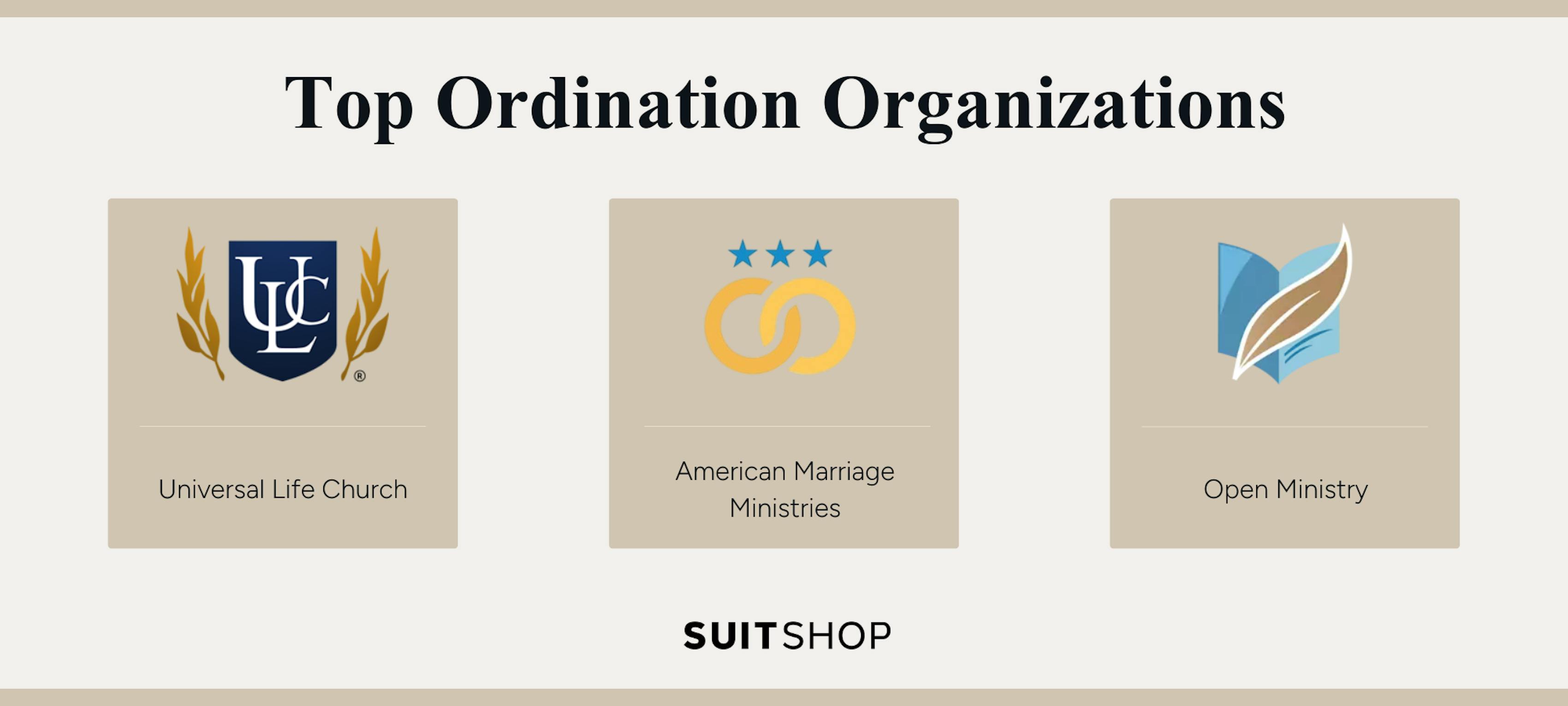
Universal Life Church
The Universal Life Church (ULC) has ordained millions of ministers since its founding in 1959. ULC ordination is free and completed entirely online. The organization welcomes people of all faiths and backgrounds, emphasizing that everyone has the right to practice their beliefs. A ULC minister receives ordination credentials recognized in most U.S. states, though local requirements vary.
The ULC also offers optional materials like an ordination certificate, minister credentials, and training resources for a nominal fee. These physical documents can be helpful when registering with your county or presenting your credentials to the couple.
American Marriage Ministries
American Marriage Ministries (AMM) focuses specifically on wedding officiation. Like the ULC, AMM offers free online ordination with an emphasis on marriage equality and inclusive practices. An AMM minister receives credentials designed to meet legal requirements across the country.
AMM has been involved in advocacy efforts to protect the rights of online-ordained ministers, particularly in states where marriage laws have been challenged. The organization provides resources to help new officiants understand their responsibilities and prepare for ceremonies.
Other Options
Other organizations offering ordination include the Open Ministry and various religious denominations that provide paths for lay people to become officiants. Some people pursue ordination through traditional religious organizations if they want a deeper connection to a specific faith tradition. These paths may involve more extensive training or a degree program, but they're not necessary for simply performing a wedding ceremony.
The Online Ordination Process
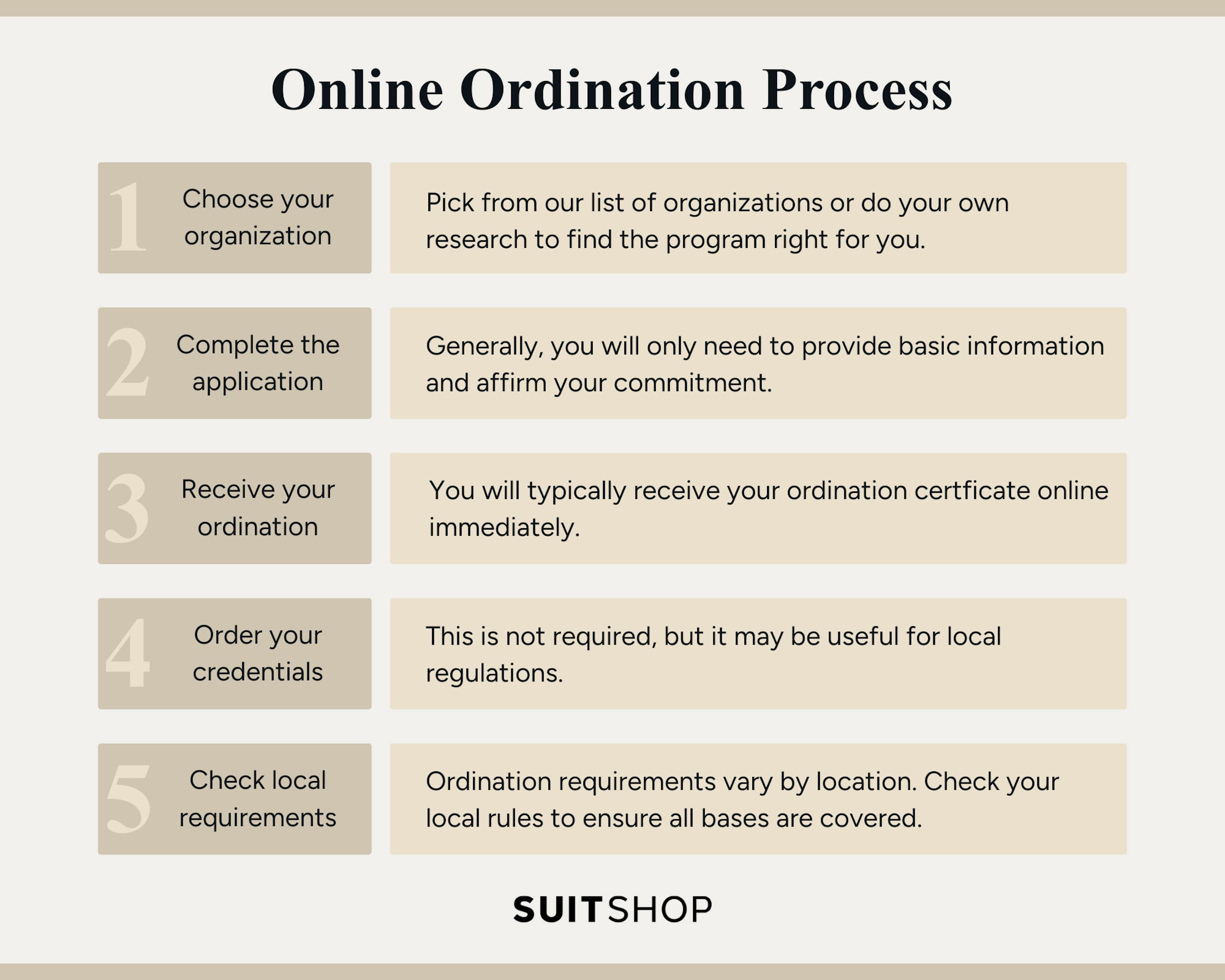
Getting ordained online typically takes just a few minutes. Here's what to generally expect:
Step 1: Choose your organization. Research the options and select an organization whose values align with yours. Check whether their ordination is recognized in the state where you'll be performing the wedding.
Step 2: Complete the application. Most organizations require only basic information: your name, address, and email. You may be asked to affirm your commitment to performing ceremonies responsibly.
Step 3: Receive your ordination. Many organizations grant ordination immediately upon completing the form. You'll typically receive confirmation via email, and you can often download a digital ordination certificate right away.
Step 4: Order credentials (optional but recommended). Physical documents like an ordination certificate, letter of good standing, and minister credentials can help when registering with local authorities. These usually cost a nominal fee.
Step 5: Check local requirements. This step is where the process gets more complicated, as requirements vary significantly by location.
Understanding Local Marriage Laws
Here's where many new officiants run into trouble. While online ordination is quick and easy, the legal requirements for actually performing a wedding vary by state and sometimes by county. Failing to meet local requirements can result in a marriage that isn't legally recognized.
State-Level Variations
Some states fully recognize online ordination with no additional requirements. Others require ministers to register with the state, obtain a license, or meet specific criteria. A few states have historically been more restrictive about who can perform marriages.
States like California, Texas, and Florida generally recognize online ordination. States like Virginia and New York have specific registration requirements. A handful of states have had legal challenges to online ordination, though most have ultimately upheld the practice.
County Requirements
Even within states that recognize online ordination, individual counties may have their own requirements. Some counties require officiant registration at the county clerk's office before you can legally perform ceremonies. Others may require you to present your ordination credential, file additional paperwork, or pay a registration fee.
Contact the county clerk in the county where the wedding will take place to understand exactly what you need to do. Ask specifically about requirements for ministers ordained online, as staff members are usually familiar with the process and can guide you through it.
Timing Considerations
Some jurisdictions impose a waiting period between ordination and when you can perform ceremonies. Others require registration a certain number of days before the wedding. Start the process early to avoid last-minute complications that could affect the couple's big day.
Exceptions and Special Circumstances
While online ordination works for most situations, some circumstances require different approaches.
Destination weddings: If the couple is getting married in a different state or country, research that location's specific requirements. Some destinations don't recognize U.S. ordinations at all.
Religious requirements: Some couples want a ceremony that satisfies the requirements of their religious organization. In these cases, ordination through that specific denomination may be necessary, even if it's not legally required.
Military weddings: Ceremonies on military bases may have additional requirements or restrictions on who can officiate.
Courthouse ceremonies: If the couple is having a civil ceremony at a courthouse, they typically don't need an outside officiant, as a judge or court official performs the ceremony.
Preparing for the Ceremony
Once you're ordained and registered, the real work begins: preparing to perform a meaningful ceremony.
Work with the Couple
Meet with the couple to understand their vision for the wedding ceremony. Discuss whether they want religious elements, personal vows, readings, or cultural traditions incorporated. Ask about the overall tone they're hoping for and any specific moments they want included.
Write the Ceremony Script
Draft a ceremony script and share it with the couple for feedback. Include all legally required elements (which vary by state) along with the personal touches that make the ceremony unique. Practice reading it aloud to check the flow and timing.
Handle the Legal Details
Coordinate with the couple about the marriage license. They'll need to obtain this from the county clerk's office before the wedding. After the ceremony, you'll sign the marriage license along with the couple and witnesses. The license then gets returned to the issuing office to be recorded, and the couple receives their official marriage certificate.
Rehearse
If possible, attend the rehearsal to walk through the ceremony logistics. Know where to stand, when to speak, and how the processional and recessional will work. Confidence in the logistics helps you stay present and focused during the actual ceremony.
Plan Your Officiant Attire
What you wear as the officiant should complement the wedding's overall look without drawing attention away from the couple. Your attire signals respect for the occasion and helps you blend seamlessly into the wedding party's visual aesthetic.
Check with the couple first. Before you start shopping, ask the couple about the dress code and color palette. Some couples want their officiant to coordinate with the wedding party, while others prefer a neutral look that doesn't match anyone specifically. Find out if there are colors to avoid (like the bridesmaids' dress color or anything too close to what the couple is wearing) and whether they have preferences about formality level.
Match the formality of the event. A black-tie evening wedding calls for different attire than a casual backyard ceremony. For formal weddings, a dark suit in navy, charcoal, or black works well for most officiants. Semi-formal and garden weddings open up lighter options like tan, light gray, or soft blue. Casual ceremonies might allow for dress pants with a blazer or a simple, elegant dress.
Consider the setting and season. For an outdoor summer wedding in the South you may want to seek lighter colors, while a winter ceremony in a cathedral calls for richer tones. Think about whether you'll be standing in direct sunlight, on grass, or in an air-conditioned ballroom, and dress accordingly.
Stick to understated elegance. As the officiant, you want to look polished but not flashy. Avoid bold patterns, overly trendy pieces, or anything that might photograph as distracting. Solid colors and subtle textures tend to work best. A well-fitted suit in a classic color is almost always a safe choice, regardless of your gender. For those who prefer dresses, a midi or maxi length in a sophisticated solid color paired with a pashmina or tailored jacket keeps the look appropriately formal.
Don't forget the details.Comfortable shoes matter since you'll be standing for the duration of the ceremony. Keep jewelry minimal and avoid anything that might catch the light or make noise. If you'll be holding note cards or a ceremony book, consider whether you need pockets or a small, elegant holder.


Look the Part on the Big Day with SuitShop
As the officiant, you'll be standing front and center throughout the ceremony and appearing in countless photos. Looking polished matters, and what you wear should complement the wedding's style without upstaging the couple.
SuitShop offers suits and formal wear perfect for officiants who want to look sharp while keeping the focus on the couple. With options for men, women, and unisex styles, you'll find something that fits your body and the wedding's aesthetic. Our online Fit Finder and free fabric swatches make it easy to find the right look, even if you're shopping from home.
And if you're not just the officiant but also helping coordinate the wedding party's attire, our group ordering tools simplify the process. From the groom and groomsmen to bridesmaids in suiting and everyone in between, our inclusive sizing and fit options mean everyone can find pieces they'll actually own and wear again. Browse our collection to find attire that helps you look your best while you help two people start their lives together.

Sean Parks
Sean Parks is an SEO Analyst, specializing in copywriting and search engine optimization. A proud University of Georgia graduate with dual degrees in Public Relations and Communication Studies, Sean combines strategic thinking with a passion for crafting content that ranks and resonates. When he's not optimizing websites or writing copy, you'll find him logging miles on the Atlanta beltline.
More Articles


Customer Service
Contact Us
- Get In Touch
- Corporate Services
- +1 (773) 303-6006
- info@suitshop.com
Sign up for emails
© Copyright 2026 SuitShop