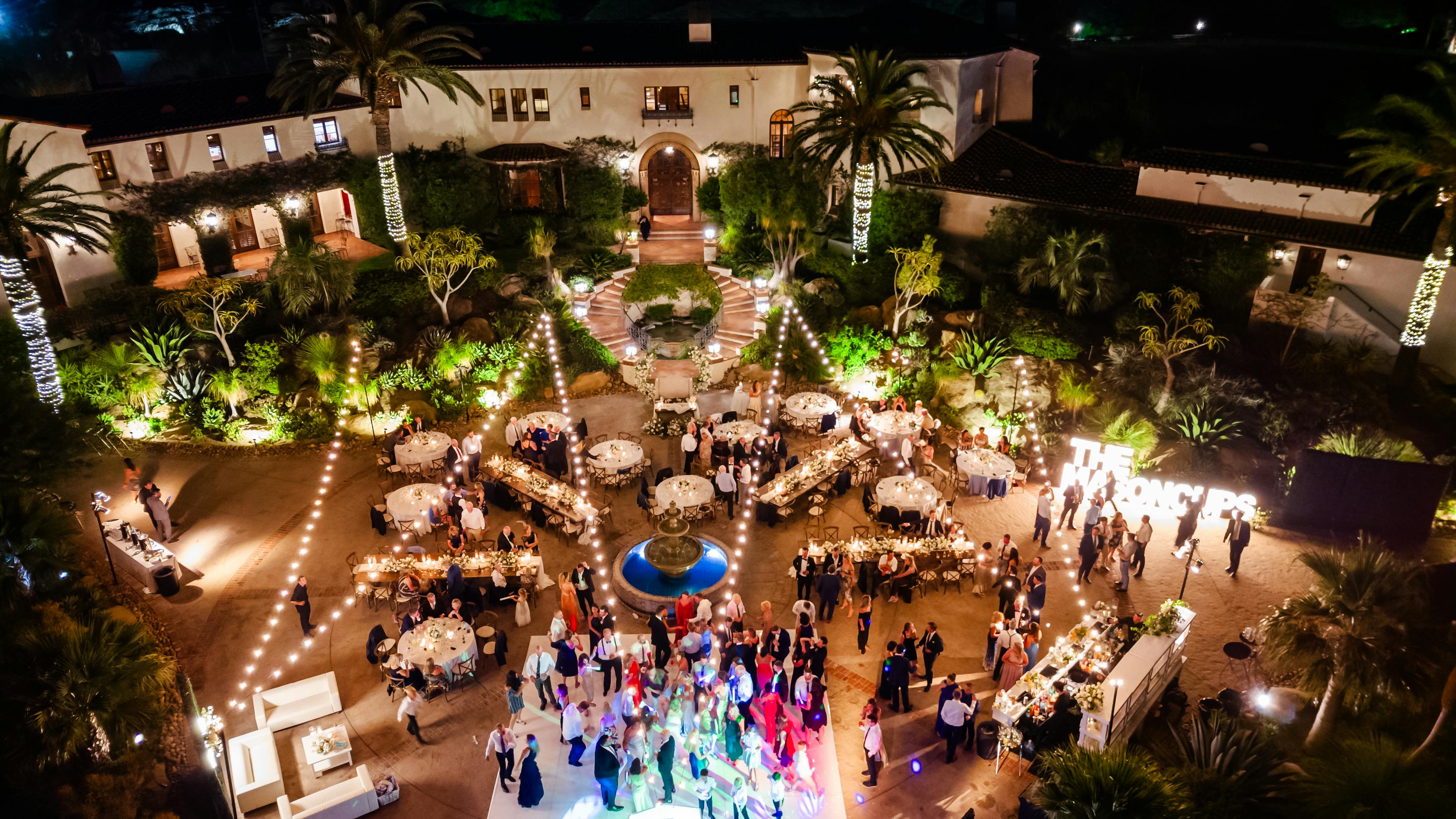
The Party After the "I Do"
The wedding ceremony may be where you exchange vows, but the reception is where the real celebration begins.
At a Glance:
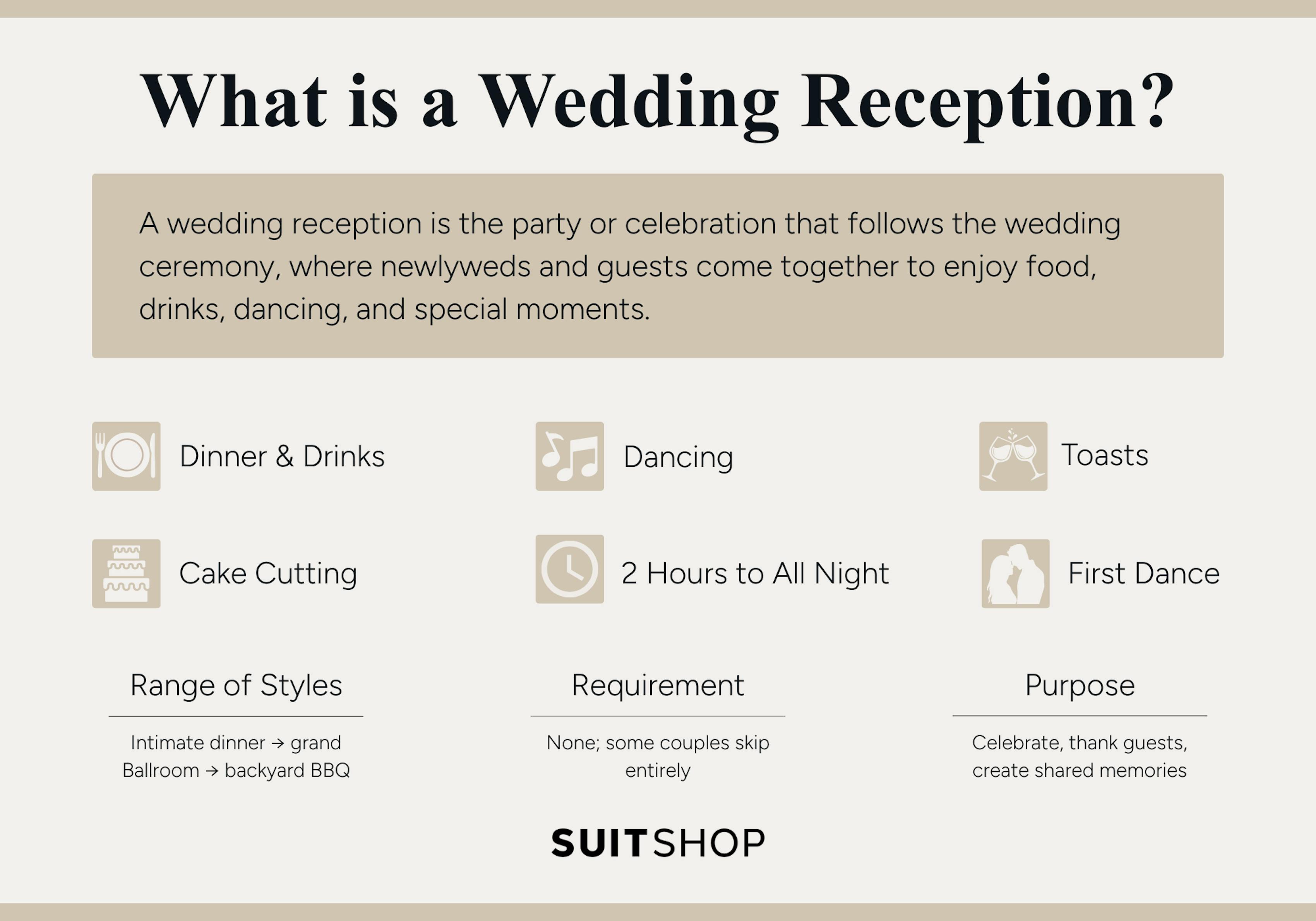
- A wedding reception is the party or celebration that follows the wedding ceremony, where newlyweds and their guests enjoy food, drinks, dancing, and special moments together
- Receptions can range from intimate dinners to grand ballroom affairs, and everything in between
- Traditional reception elements include the first dance, cake cutting, toasts, bouquet toss, and garter toss, though couples can customize or skip any of these
- Planning a reception involves choosing a venue, creating a guest list, selecting vendors, and organizing the timeline
- Couples are not required to have a reception; some opt for ceremony-only celebrations or small gatherings with close friends and family
- The style of your reception should reflect your personality as a couple and set the tone for your new life together
A wedding reception gives you the chance to celebrate your marriage with the people who matter most. From the grand entrance to the last song of the night, this is where memories are made and traditions come to life.
What Exactly is a Wedding Reception?
The party or gathering that takes place after the wedding ceremony is the reception. While the ceremony focuses on the formal exchange of vows between the couple, the reception shifts the focus to celebration. This is when guests come together to honor the newlyweds with food, drinks, music, and dancing.
The word "reception" comes from the idea of receiving guests. Historically, the couple would greet and welcome their wedding guests after the ceremony, thanking them for witnessing their union. Over time, this simple gathering evolved into the elaborate events we see today.
Receptions can last anywhere from a couple of hours to an entire evening, depending on your preferences and budget. Some couples host a full reception with a sit-down dinner, live band, and hours of dancing. Others prefer a shorter cocktail-style gathering or a casual backyard barbecue. There are no strict rules about what a reception must include.
Do You Have to Have a Wedding Reception?
The short answer is no. A wedding reception is not a legal requirement, and plenty of couples choose to skip it entirely. Some reasons couples might forgo a reception include:
- Budget constraints
- Preference for an intimate, private ceremony
- Elopement
- Destination weddings where a large gathering isn't practical
- Personal preference for simplicity
- Health or family circumstances
If a full reception doesn't feel right for you, consider alternatives like a small dinner with immediate family, a brunch celebration the day after, or a casual gathering at a favorite restaurant. Your wedding day should reflect what matters most to you as a couple.
That said, receptions offer a unique opportunity to spend quality time with your guests, many of whom may have traveled to celebrate with you. It's a chance to thank them for their support, enjoy their company, really mark the occasion of your wedding, and create memories that will last a lifetime.
Traditional Reception Elements
While every wedding reception is different, certain traditions have remained popular for generations. You can include all, some, or none of these elements based on your vision for the big day.
Grand Entrance
The grand entrance marks the moment when the wedding party and newlyweds are introduced to the reception guests. The DJ, emcee, or band typically announces each member of the bridal party, followed by the bride and groom or couple. Some people opt for an entrance for just the newlyweds rather than the full party. Many couples choose upbeat music and make a memorable entrance with dancing or playful gestures.
First Dance
The first dance is a romantic moment where the newlyweds share their first official dance as a married couple. Some couples choreograph an elaborate routine, while others simply sway to a meaningful song. Parent dances, such as the father-daughter and mother-son dances, often follow.
Toasts and Speeches
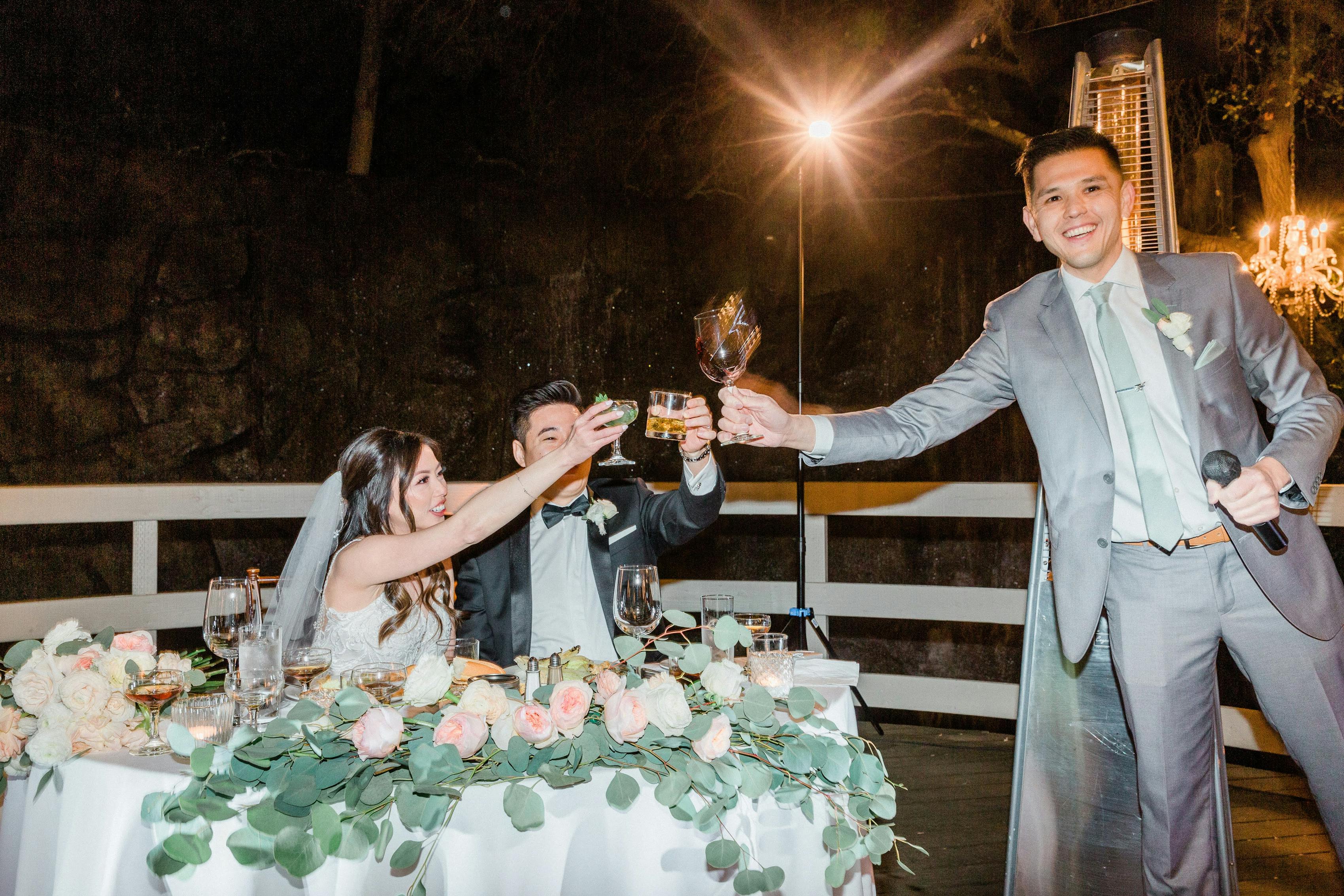
Toasts are a beloved reception tradition where close friends and family offer words of love, humor, and advice to the couple. The best man and maid of honor typically give speeches, though parents, siblings, or other loved ones may also speak. Keep a few minutes set aside for each toast to maintain the flow of the evening.
Dinner and Drinks
Food and drinks are central to any reception. Options range from plated dinners to buffet stations, food trucks, or family-style service. An open bar, limited bar, or drink stations can accommodate different budgets and preferences.
Cake Cutting
The wedding cake cutting is a sweet moment that symbolizes the couple's first task together as partners. Couples often feed each other a bite of cake, and guests enjoy slices of cake for dessert.
Bouquet Toss and Garter Toss
These playful traditions involve the bride tossing her bouquet to unmarried female guests and the groom removing and tossing the garter to unmarried male guests. While still popular, many modern couples choose to skip these activities.
Money Dance
In some cultures and regions, the money dance is a tradition where guests pay to dance with the bride or groom. The collected money is given to the couple as a wedding gift.
Dancing
Once the formalities wrap up, the dance floor opens for guests to enjoy music and dancing. This is often the most energetic part of the reception, lasting until the end of the night.
Choosing Your Reception Venue
Selecting the perfect venue is one of the biggest decisions you'll make when planning your reception. The reception venue sets the tone for the entire celebration and influences everything from your guest count to your decor choices.
Types of Reception Venues
Wedding reception venues come in many forms:
- Ballrooms and banquet halls: Classic choices that offer elegant spaces, catering services, and room for large guest lists
- Outdoor spaces: Gardens, vineyards, farms, and beaches provide a natural backdrop for an outdoor wedding reception
- Restaurants and breweries: Intimate settings with built-in food and drink service
- Historic estates and mansions: Unique venues with architectural charm and photo opportunities
- Barns and rustic venues: Popular for couples seeking a relaxed, country-inspired atmosphere
- Hotels and resorts: Convenient options that offer lodging for out-of-town guests
- Backyards and private properties: Budget-friendly options that allow for complete customization
What to Consider When Choosing a Venue
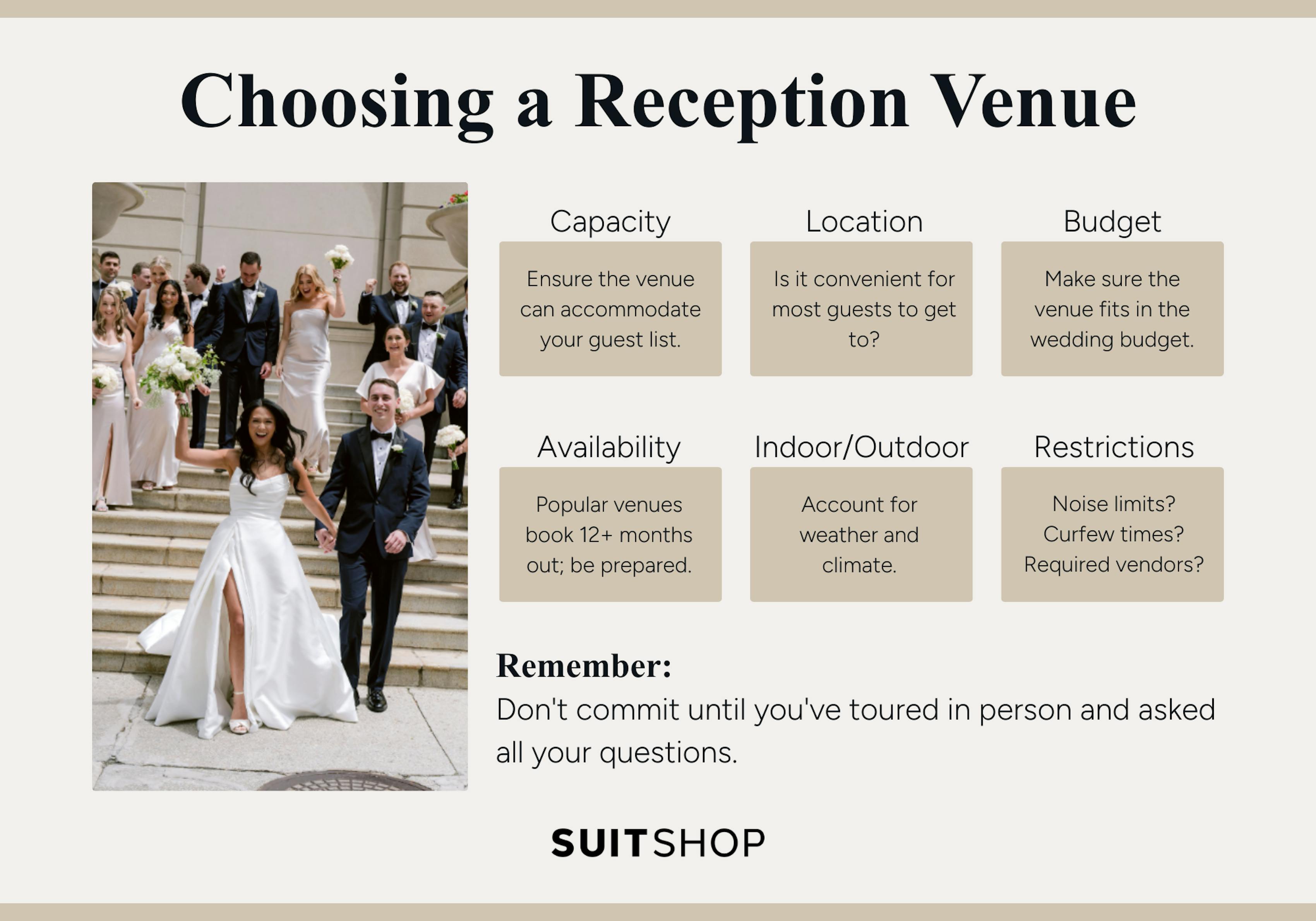
When touring wedding venues, keep these factors in mind:
- Capacity: Can the venue comfortably accommodate your guest list?
- Location: Is it convenient for the majority of your guests? Consider proximity to the ceremony location.
- Budget: What's included in the rental fee? Are there additional costs for catering, chairs, or setup?
- Availability: Popular venues book up quickly, sometimes a year or more in advance.
- Indoor/outdoor options: Does the venue have a backup plan for weather?
- Restrictions: Are there noise limits, vendor requirements, or time constraints?
The perfect setting for your reception should align with your vision, budget, and practical needs. Don't be afraid to visit multiple venues before making your decision.
Planning Your Reception Timeline
A well-organized timeline keeps your reception flowing smoothly and helps your wedding vendors coordinate their efforts. While every reception is different, here's a general outline of how events might unfold:
- Cocktail hour (45-60 minutes): Guests enjoy drinks and appetizers while the wedding party takes photos.
- Grand entrance (5-10 minutes): The wedding party and couple are introduced.
- First dance (3-5 minutes): The newlyweds share their first dance
- Welcome and blessing (5 minutes): A brief welcome or prayer before dinner
- Dinner service (60-90 minutes): Guests enjoy their meal
- Toasts (15-20 minutes): Speeches from the best man, maid of honor, and others
- Parent dances (5-10 minutes): Special dances with parents
- Cake cutting (10 minutes): The couple cuts and shares the wedding cake
- Open dancing (90-120 minutes): Guests enjoy the dance floor
- Bouquet and garter toss (10-15 minutes): Optional traditions
- Last dance and exit: The couple shares a final dance and makes their departure
Your wedding photographer will appreciate having a timeline in advance to capture all the important moments. Share the schedule with your DJ or band, caterer, and other vendors so everyone stays on the same page and upholds the flow you have in mind.
Reception Themes and Styles
Your reception should reflect your personality as a couple. Here are some popular themes to inspire your planning:
- Classic and elegant: Timeless decor, neutral colors, and formal attire
- Rustic: Barn venues, wooden accents, and natural textures
- Garden party: Outdoor setting, floral arrangements, and light, airy vibes
- Modern and minimalist: Clean lines, simple decor, and a sleek color palette
- Vintage: Antique touches, lace details, and nostalgic charm
- Bohemian: Relaxed atmosphere, eclectic decor, and earthy tones
- Black-tie: Formal dress code, upscale venue, and sophisticated details
- Destination: Beach, mountain, or international locale with travel-inspired touches
Consider adding personal elements like a photo booth, custom signage, a seating chart that reflects your interests or the theme, or a signature cocktail named after your love story.
Budgeting for Your Reception
The reception typically accounts for the largest portion of a wedding budget. Costs vary widely based on your location, guest count, and choices, but here are the main expenses to plan for:
- Venue rental
- Catering and drinks
- Music and entertainment
- Decor and florals
- Photography and videography
- Wedding cake or desserts
- Rentals (tables, chairs, linens)
- Invitations and stationery
To stay on budget, prioritize what matters most to you and look for areas to save. A weekday or off-season wedding can reduce venue costs, while a smaller guest list naturally lowers catering expenses.
What to Wear to the Reception
Your reception attire should match the formality and style of your celebration. As guests move from the ceremony to the reception, some couples choose to change into another outfit—a wedding second look—for comfort or style. The groom might swap a tuxedo jacket for a suit jacket, while the bride may trade her formal gown for something easier to dance in.
For the wedding party, coordinated attire creates a polished look in photos and throughout the evening. Groomsmen and bridesmaids should feel comfortable enough to enjoy the dancing and festivities while still looking sharp.
Guests often wonder what to wear to a wedding reception, especially when the dress code isn't clear. So for planning couples, be sure to specify the dress code that’s desired or appropriate for your wedding (think black-tie, semi-formal, cocktail, beach formal, and so on, in accordance with your venue, activities, and theme). When in doubt, lean toward slightly more formal attire. A well-fitted suit is always a safe and stylish choice for any guest attending a reception.


Dress the Part for Your Celebration
Your wedding reception is a once-in-a-lifetime celebration, and looking your best is part of what makes the day so special. From the groom and best man to every member of the wedding party, the right attire sets the tone for a memorable evening.
SuitShop offers a range ofsuits andtuxedos for grooms, groomsmen, and wedding guests alike. With inclusive sizing for men, women, and kids, plus the option to mix and match separates for the perfect fit, you can outfit your entire wedding party with ease. Free fabric swatches let you preview colors before ordering, and group ordering tools make coordination for groomsmen and beyond simple. Unlike rentals, SuitShop suits are yours to keep and wear again for future celebrations, work events, or any occasion that calls for looking sharp.Browse the collection and find the perfect look for the big day.

Sean Parks
Sean Parks is an SEO Analyst, specializing in copywriting and search engine optimization. A proud University of Georgia graduate with dual degrees in Public Relations and Communication Studies, Sean combines strategic thinking with a passion for crafting content that ranks and resonates. When he's not optimizing websites or writing copy, you'll find him logging miles on the Atlanta beltline.
More Articles

Customer Service
Contact Us
- Get In Touch
- Corporate Services
- +1 (773) 303-6006
- info@suitshop.com
Sign up for emails
© Copyright 2026 SuitShop