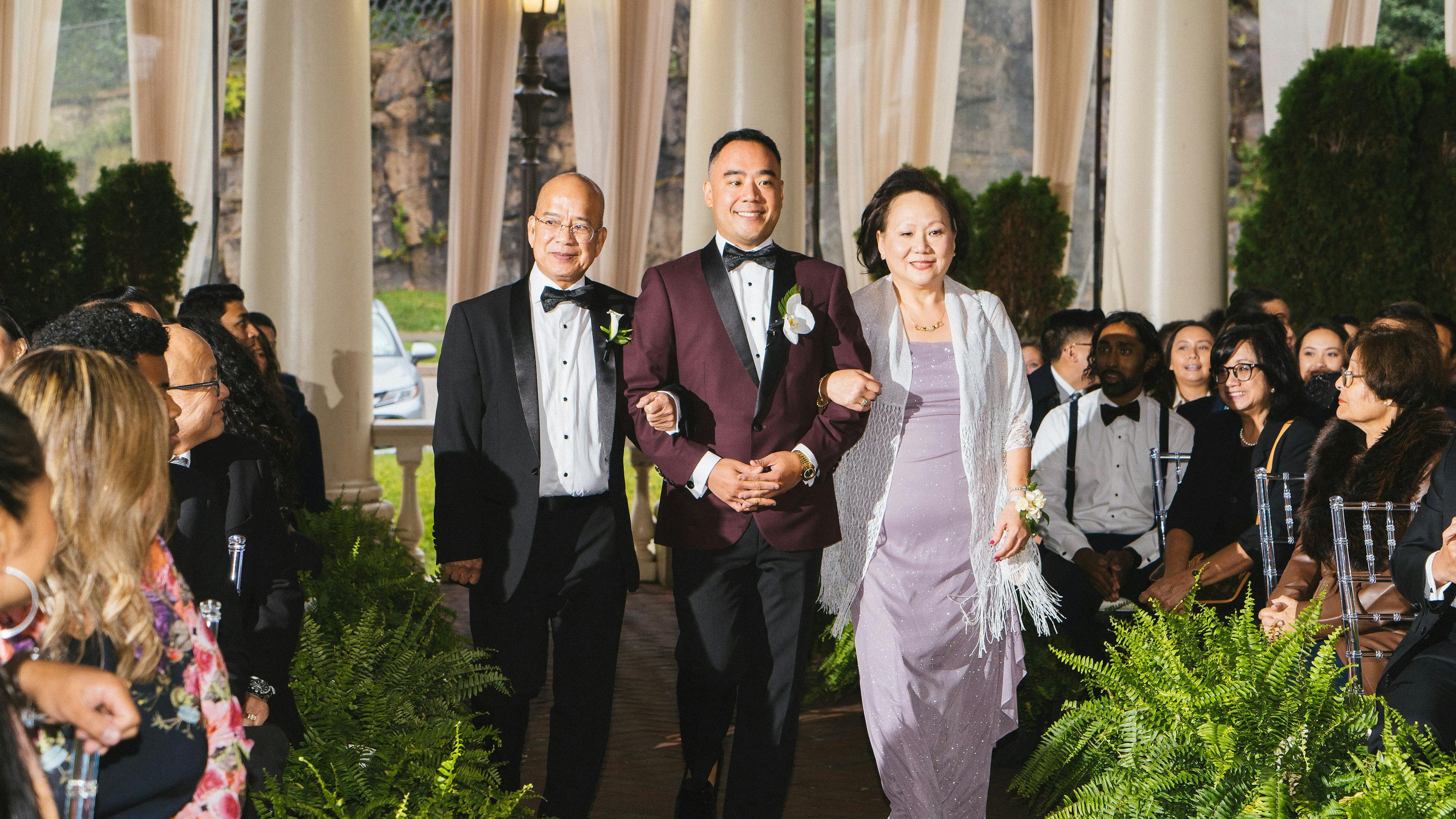
The Groom's Walk: Tradition Meets Personal Choice
When it comes to wedding processional order, the bride's entrance often steals the spotlight, but a groom's walk to the altar is just as meaningful.
At a Glance:
- In many Western traditions, the groom does not walk down the aisle at all; instead, he enters from the side with the officiant and waits at the altar for the bride.
- Jewish ceremony traditions have both of the groom's parents escort him down the aisle, followed by the bride with her parents.
- Some couples choose to have the groom walk with his mother, both parents, a close friend, grandparent, or another special family member.
- Same-sex couples and nontraditional weddings often create their own processional order that reflects their unique relationships.
- Hindu wedding ceremonies sometimes feature the groom arriving on a decorated horse in a celebratory procession called the baraat.
- There are no strict rules; the groom can walk alone, be escorted, or skip the aisle walk entirely based on personal preference.
The question of who walks the groom down the aisle depends largely on cultural background, religious ceremony customs, and personal preference. Understanding the different traditions can help couples plan a wedding processional that feels authentic to their relationship and honors the people who matter most.
The Traditional Western Approach
In traditional Christian and secular Western weddings, a groom typically does not walk down the aisle in the same way a bride does. Instead, the traditional processional order looks something like this:
- The officiant enters and takes their place at the altar
- The groom enters from the side of the ceremony space, often accompanied by the best man
- Groomsmen and bridesmaids walk down the aisle, sometimes in pairs
- The ring bearer and flower girl make their entrance
- The maid of honor walks down the aisle
- Finally, the bride makes her grand entrance, traditionally escorted by her father
In this traditional way, the groom is already standing at the end of the aisle when the bride begins her walk. He watches the wedding party process before turning to see his bride approach. This format places the focus on the bride's entrance as the emotional climax of the wedding processional.
Many couples still follow this format because it creates a special moment when the groom sees the bride for the first time in her wedding attire. However, this tradition is far from the only option.
Jewish Wedding Traditions
The Jewish ceremony offers a beautiful alternative that gives the groom his own aisle moment. In traditional Jewish weddings, the processional order typically includes:
- The rabbi and cantor enter first
- The groom's grandparents walk down the aisle and take their seats in the front row
- The bride's grandparents follow
- The groom walks down the aisle escorted by both of his parents, one on each side
- The best man and groomsman follow
- The bridesmaids walk, followed by the maid of honor
- The ring bearer and flower girl proceed
- The bride walks down the aisle escorted by both of her parents
This tradition reflects the Jewish belief that marriage is not just a union between two individuals, but a joining of two families. Having both parents escort their children down the aisle symbolizes the family's role in blessing and supporting the marriage.
The groom's parents stand beside him under the chuppah (wedding canopy), and the bride's parents do the same for her. This inclusive approach ensures that both sets of parents play an active role in the ceremony.
Hindu Wedding Ceremonies
Hindu wedding traditions offer yet another approach to the groom's entrance. In many Hindu ceremonies, the groom arrives at the wedding venue in a celebratory procession called the baraat. This joyous event often features:
- The groom riding on a decorated horse or sometimes a highly-decorated horse with elaborate adornments
- Family members and wedding guests dancing and celebrating around the groom
- Live music with drums and other traditional instruments
- The groom's family leading him to meet the bride's family
The baraat transforms the groom's arrival into a festive celebration rather than a solemn walk. The bride's family greets the groom and his party at the entrance to the ceremony space, welcoming them with rituals and gifts.
This tradition makes the groom's entrance a shared celebration that involves the entire wedding party and guests, setting a joyful tone for the ceremony to follow.
Modern and Personalized Options
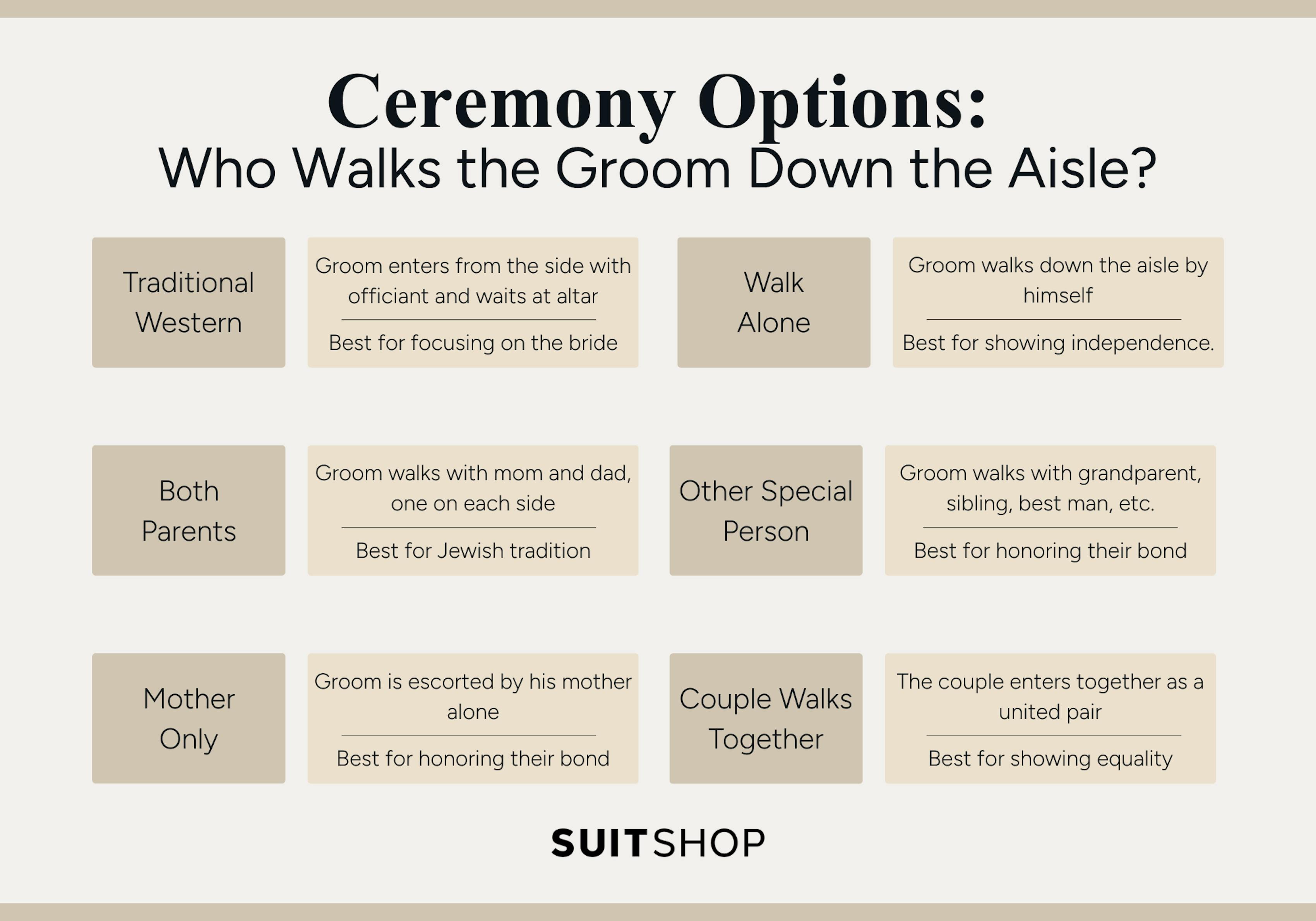
Many couples today choose to create their own traditions for the wedding processional. There is no rule that says you must follow any particular format. Here are some popular alternatives for the groom's entrance:
Groom Walks with His Mother
Some grooms choose to walk down the aisle escorted by their mother alone. This option honors the special bond between mother and son and gives her a prominent role in the ceremony. It works particularly well when the groom's father is not present or when the groom feels especially close to his mother.
Groom Walks with Both Parents
Borrowing from Jewish tradition, many couples of all backgrounds now have the groom walk with both parents. This acknowledges the role both parents played in raising him and symbolizes their blessing on the marriage.
Groom Walks Alone
Some grooms prefer to walk down the aisle by themselves. This can be a powerful choice that demonstrates independence and personal commitment. Walking alone allows the groom to have his own special moment in the spotlight before the bride's entrance.
Groom Walks with a Close Friend or Family Member
If the groom's parents are not available or if another person played a parental role in his life, he might choose to walk with:
- A grandparent
- A sibling
- A stepparent
- An aunt or uncle
- A close friend or mentor
- The best man
Groom and Bride Walk Together
Some couples choose to walk down the aisle together, entering the ceremony space as a united pair. This option works well for couples who have been together for a long time, who live together, or who simply want to symbolize that they are entering marriage as equal partners.
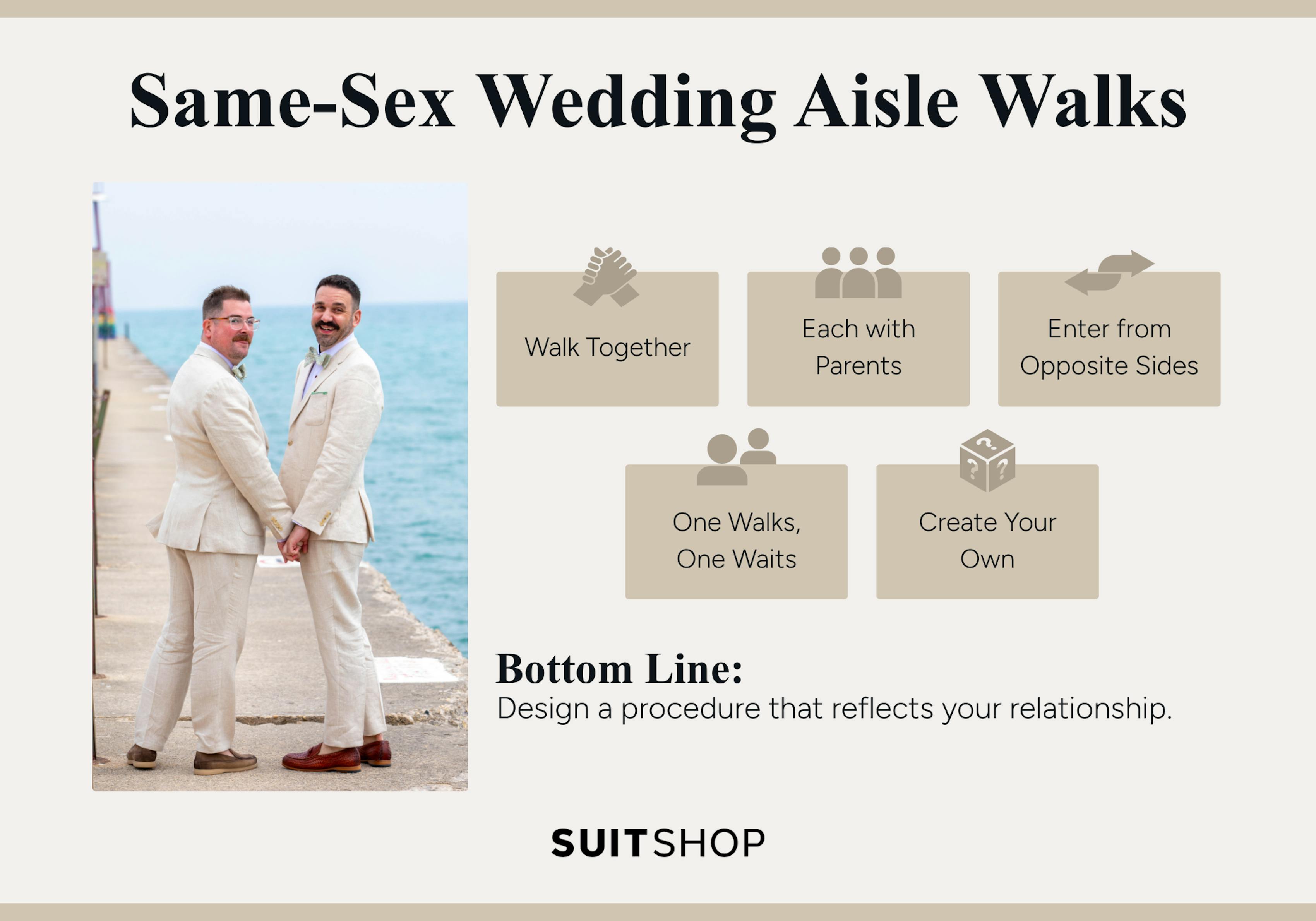
Same-Sex Couples and the Processional
Same-sex couples often have more flexibility in planning their wedding processional order since there are no long-standing traditions to follow. This freedom allows couples to create a ceremony that truly reflects their relationship.
Some options for same-sex couples include:
- Both partners walking down the aisle together
- Each partner walking with their respective parents
- Each partner having their own entrance from opposite sides
- One partner waiting at the altar while the other walks down the aisle
- Creating an entirely new format that feels meaningful to the couple
The key is to choose an approach that honors both partners equally and reflects the nature of their relationship. There is no right or wrong answer.
Handling Complicated Family Situations
Family dynamics can make planning the wedding processional challenging. Here are some common situations and how couples navigate them:
Divorced Parents
If the groom's parents are divorced, he might choose to walk with one parent, walk with each parent separately at different points, or walk alone to avoid any awkward moments. Some grooms walk with their mother and have their father take a seat before the procession begins.
Deceased Parent
If a parent has passed away, the groom might walk with his surviving parent, carry a photo or memento of the deceased parent, play their parent’s favorite song while walking down the aisle, or honor them in another way during the ceremony.
Estranged Relationships
Not every groom has a close relationship with his parents. In these cases, walking with another family member, the best man, or alone can feel more authentic than forcing a moment that doesn't reflect reality.
Blended Families
Grooms from blended families might include both biological and stepparents in the processional. There are creative ways to honor everyone who played a role in raising the groom.
Planning Your Processional
When deciding who walks the groom down the aisle, consider the following:
- Cultural and religious background: What traditions, if any, are important to you and your families?
- Family relationships: Who do you want to honor with a special role in the ceremony?
- Personal preference: What feels right to you as a couple?
- Logistics: How will the processional work in your specific ceremony space?
- Communication: Have you discussed the plan with everyone involved to avoid surprises?
Talk with your officiant and wedding planner about your ideas. They can help you create a processional order that flows smoothly and feels meaningful.
Dressing for the Moment
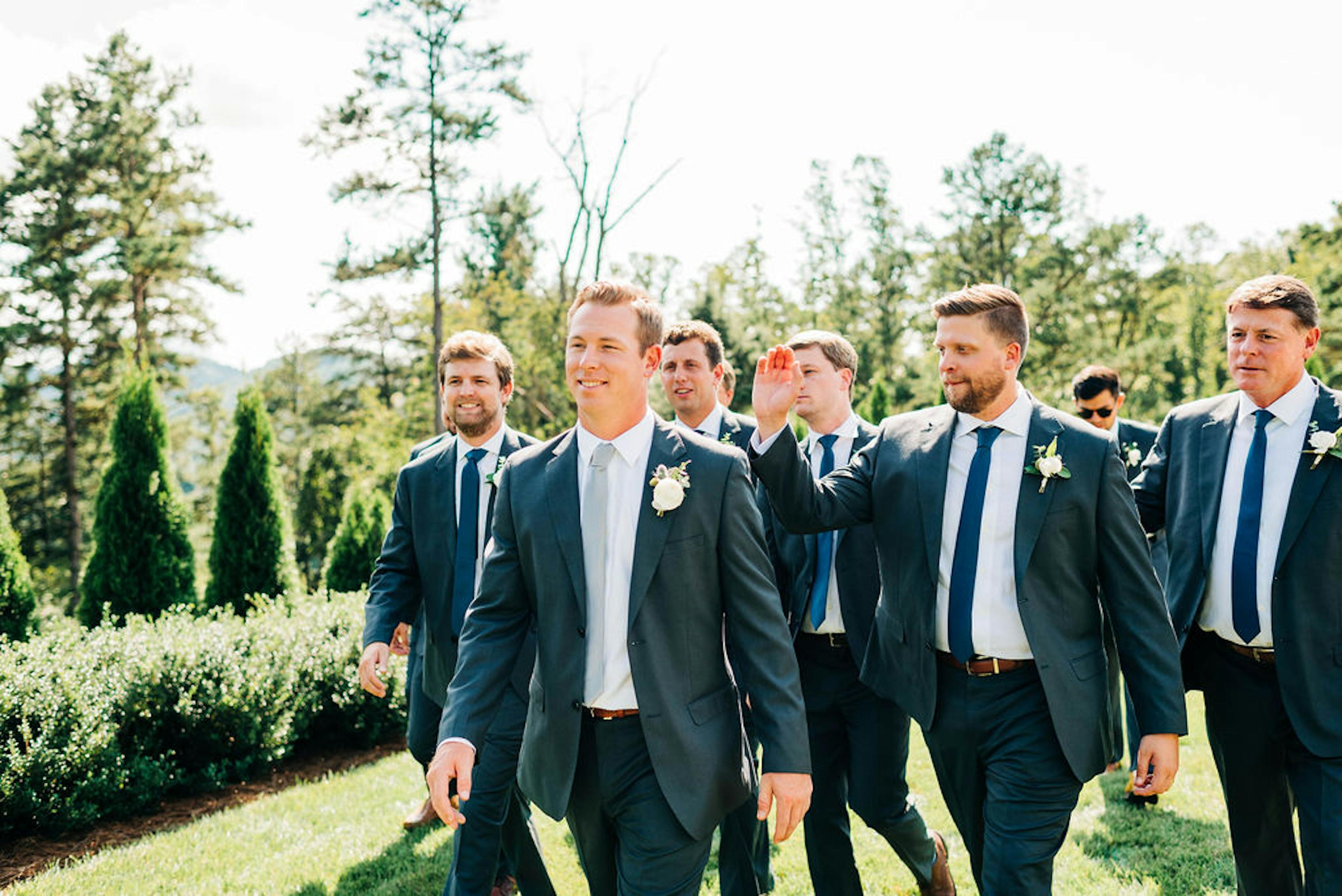
No matter how the groom makes his entrance, looking polished and confident matters. The walk down the aisle, whether traditional or unconventional, is one of the most photographed moments of the wedding day. A well-fitted suit or tuxedo helps the groom look his best as all eyes turn his way.
The groom's attire should complement the wedding's overall style and coordinate with the wedding party. Groomsmen, the best man, and fathers walking in the processional should also look sharp and cohesive. Attention to details like dress shirts,ties, andaccessories can elevate the entire wedding party's attire and overall look.


Make Your Entrance in Style
The walk down the aisle is a meaningful part of any wedding ceremony, and the groom deserves to look as confident as he feels.SuitShop offers a range ofsuits andtuxedos designed for grooms, groomsmen, and every member of the wedding party. With inclusive sizing, free fabric swatches to preview colors, and easy group ordering, SuitShop makes it simple to coordinate your entire crew. Unlike rentals, SuitShop suits are yours to keep and wear again. Browse the collection and find the perfect look for your big day.

Sean Parks
Sean Parks is an SEO Analyst, specializing in copywriting and search engine optimization. A proud University of Georgia graduate with dual degrees in Public Relations and Communication Studies, Sean combines strategic thinking with a passion for crafting content that ranks and resonates. When he's not optimizing websites or writing copy, you'll find him logging miles on the Atlanta beltline.
More Articles

Customer Service
Contact Us
- Get In Touch
- Corporate Services
- +1 (773) 303-6006
- info@suitshop.com
Sign up for emails
© Copyright 2026 SuitShop